
Digital Reconstruction of the U.S. Base in Baltra, Galápagos Islands: A Forgotten Chapter of WWII in South America

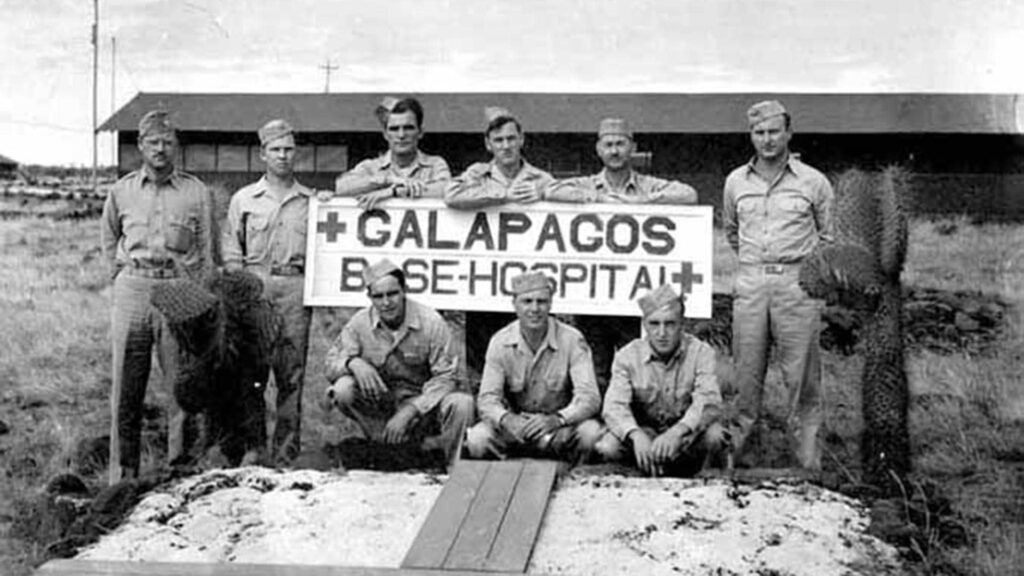
The contemporary history of the Galápagos includes little-known episodes that contrast with the archipelago’s current image as a natural sanctuary. One of these took place on Baltra Island, where, during World War II, a large-scale U.S. military base was established as part of a strategy to protect the Panama Canal. This intervention significantly transformed the territory and its ecosystems. Over time, much of this infrastructure was dismantled or abandoned, leaving traces that are barely visible today.
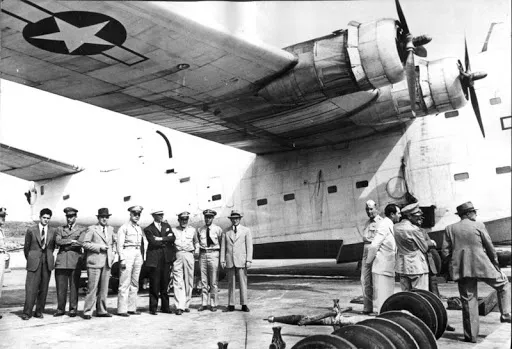
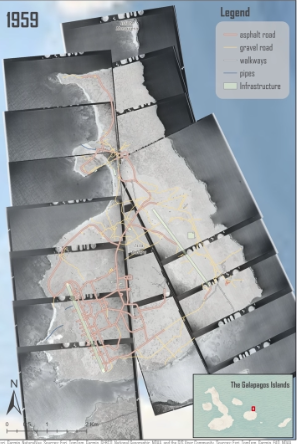
In order to recover this historical chapter and better understand its scope, a research team from the Galapagos Science Center developed a three-dimensional digital reconstruction of the military base as it existed between 1942 and 1946. The study combined multiple sources of information, including historical aerial photographs, maps, archival records, satellite imagery, and drone-based field surveys.

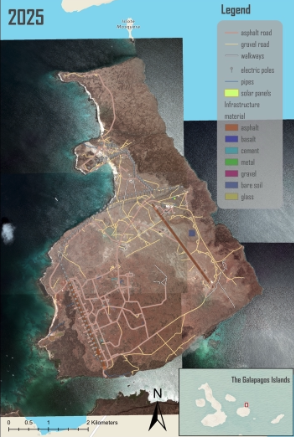
This approach made it possible to identify and map more than 600 structures, as well as analyze changes in land use over several decades. The results highlight both the scale of human occupation during that period and the gradual disappearance of much of the original infrastructure.
Beyond historical reconstruction, the study also demonstrates the natural environment’s capacity for recovery. Today, much of the island shows signs of ecological regeneration, with native species recolonizing previously impacted areas. The digital model not only contributes to scientific knowledge but also serves as a valuable tool for education, conservation, and heritage interpretation.
Read the article here: https://doi.org/10.5194/isprs-archives-XLVIII-3-W4-2025-71-2026
Recent Posts

In 2022, the Galapagos Science Center (GSC) and the broader UNC & USFQ Galapagos Initiative will celebrate its 10th Anniversary. We are proud to announce the World Summit on Island Sustainability scheduled to be held on June 26–30, 2022 at the Galapagos Science Center and the Community Convention Center on San Cristobal Island.

The content of the World Summit will be distributed globally through social media and results documented through papers published in a book written as part of the Galapagos Book Series by Springer Nature and edited by Steve Walsh (UNC) & Carlos Mena (USFQ) as well as Jill Stewart (UNC) and Juan Pablo Muñoz (GSC/USC). The book will be inclusive and accessible by the broader island community including scientists, managers, residents, tourists, and government and non-government organizations.

While the most obvious goal of organizing the World Summit on Island Sustainability is to celebrate the 10th Anniversary of the GSC and the UNC-USFQ Galapagos Initiative, other goals will be addressed through special opportunities created as part of our operational planning of the World Summit.

For instance, we seek to elevate and highlight the Galapagos in the island conservation discourse, seeking to interact with other island networks in more obvious and conspicuous ways to benefit the Galapagos Islands, the UNC-USFQ Galapagos Initiative, and the world. We will seize the opportunity to further develop the I2N2 – International Islands Network-of-Networks. Further, we wish to highlight and emphasize multiple visions of a sustainable future for the Galapagos Islands and we cannot do this alone. Therefore, engaging the Ecuadorian Ministry of Environment, the Ministry of Tourism, the Government Council of Galapagos, the Galapagos National Park, and local Galapagos authorities, including government and non-government organizations and local citizen groups, is imperative.

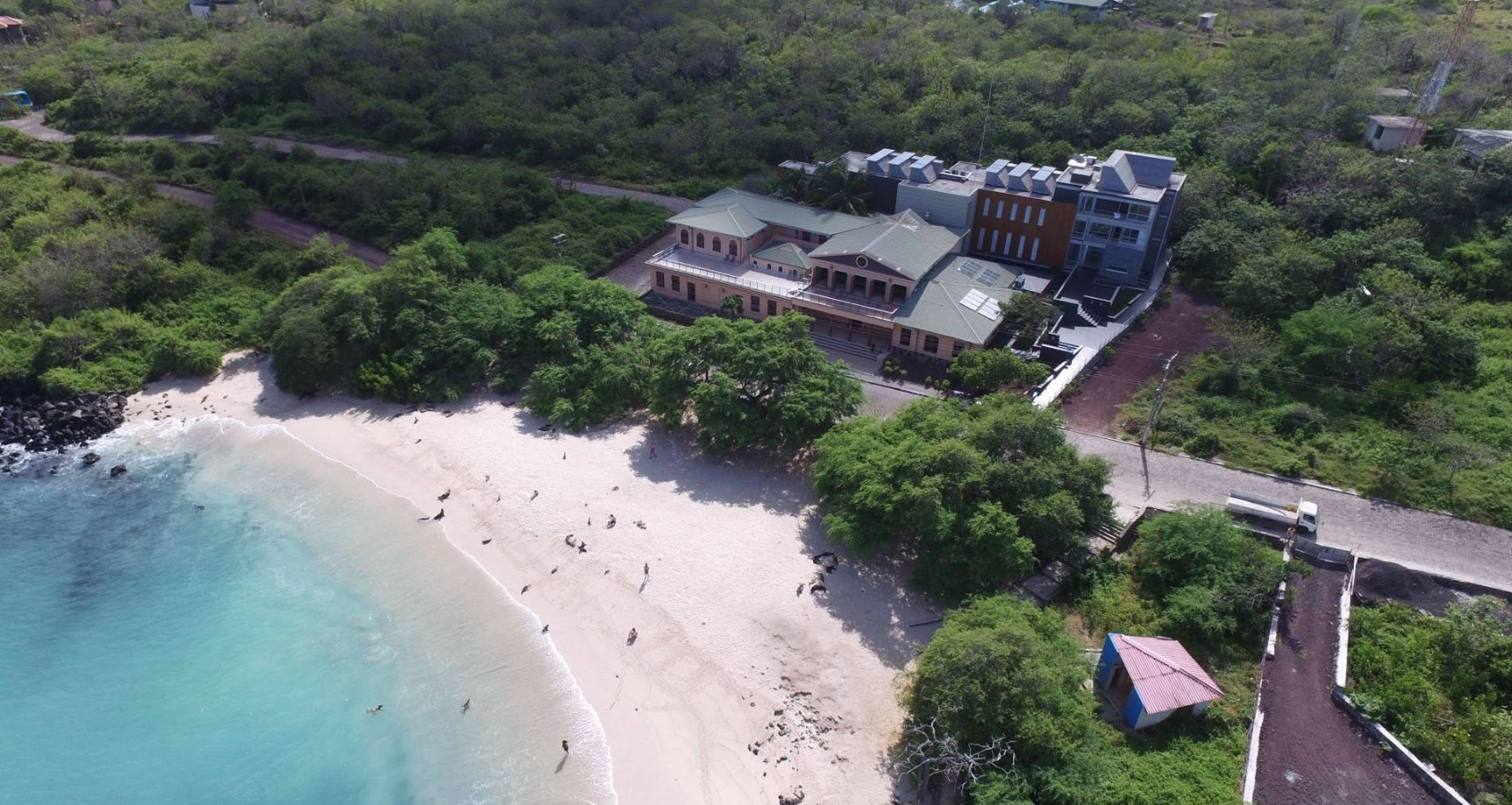
The Galapagos Science Center on San Cristobal Island, Galapagos

Borrowing from Hawaii’s and Guam’s Green Growth Program and the Global Island Partnership, we wish to examine existing global programs that emphasize island sustainability and their incorporation into life, policies, and circumstances in the Galapagos Islands. We will also seek to enhance our connections with the institutional members of our International Galapagos Science Consortium and expand the Consortium through the recruitment of other member institutions. We will also work to benefit islands and their local communities by working with citizen groups as well as important NGOs who seek to improve the natural conditions in the Galapagos and diminish the impact of the human dimension on the future of Galapagos’ ecosystems.

Lastly, we will use the World Summit to benefit UNC & USFQ and our constituencies through a strong and vibrant communication plan about the World Summit, creating corporate relationships as sponsors, identifying funding goals through donors, and benefiting our study abroad program for student engagement in the Galapagos Islands. We plan to develop and issue a Galapagos Sustainability Communique after the World Summit that includes the vision and insights of all its participants for a sustainable Galapagos with applicability to global island settings.

We are eager to hear your perspective and have you join us at the World Summit on Island Sustainability!