
Photo: Greenpeace
This laboratory focuses on studying the interactions between the environment, humans, and other organisms under the integrated approach known as One Health. It carries out research and monitoring that allow the identification of health risks associated with environmental factors such as water quality, air quality, presence of pathogens, chemical contaminants, or zoonotic diseases.
Its main goal is to generate scientific information that contributes to disease prevention, protection of public health, and conservation of ecosystems.
Research on Land. Impact for Life.
Photo: Greenpeace
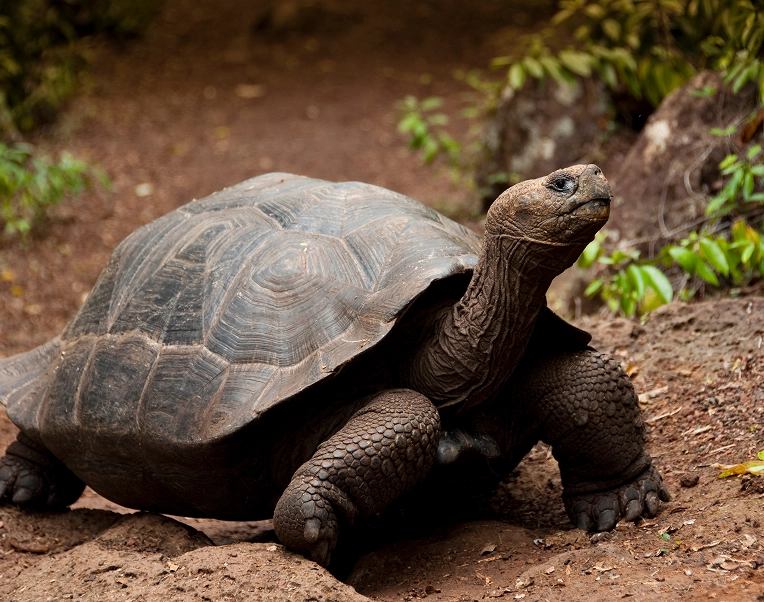
Investigating Terrestrial Ecosystems from the Ground Up
Photo: Alam Coss @alamcoss
The GSC is part of the AERONET network (AErosol RObotic NETwork) which is a federation of terrestrial aerosol remote sensing networks established by NASA and PHOTONS. For more than 25 years, the AERONET network has provided a long-term, continuous, and easily accessible public domain database of aerosol optical, microphysical, and radiative properties for aerosol research and characterization, validation of satellite recoveries, and synergism with other databases. The network imposes standardization of instruments, calibration, processing, and distribution.
The GSC has an advanced measuring device that serves as a basis for air quality studies such as “Air quality in the Galápagos Islands: A baseline view from remote sensing and in situ measurements”, by Dr. Maria del Carmen Cazorla from USFQ, which represents the first study of this topic in the Galapagos islands. Research is also conducted by Dr. William Vizuete from UNC such us “Quantifying the resource and composition of organic marine aerosols in the Galapagos Islands” that seeks to improve knowledge about air pollution in the atmosphere.
Freshwater is essential for the development and quality of life. Regarding water quality, the GSC actively participates in its monitoring through the project “Long-term monitoring program of San Cristobal Island water quality” run jointly by Dr. Jill Stewart (UNC) and Dr. Valeria Ochoa (Universidad del Rosario), through which updated information is generated involving the local community.
Additionally, Dr. Diego Riveros-Iregui (UNC) seeks to determine water availability for human consumption by assessing precipitation inputs such as fog and rainfall, ecosystem water use, water storage, and water availability. The tropics are of particular interest to address global sustainability questions as they face growing populations and demands for freshwater.
Photo: David Liberio
The GSC´s objective is to increase the knowledge of the natural history, ecology, distribution, and conservation status of Galapagos flora and fauna. Specifically, the GSC prioritizes the study of native and introduced species in order to develop practices that favor their conservation and eradication respectively.
The GSC conducts research in this area, such as ”Terrestrial bird history, distribution and population status in the San Cristobal Island” and “Snakes and geckos in San Cristobal and Española Islands, Galapagos”, both conducted by Dr. Diego Cisneros (USFQ).
Photo:
Photo: Greenpeace
Join Our Mission
| Cookie | Duration | Description |
|---|---|---|
| cookielawinfo-checkbox-analytics | 11 months | This cookie is set by GDPR Cookie Consent plugin. The cookie is used to store the user consent for the cookies in the category "Analytics". |
| cookielawinfo-checkbox-functional | 11 months | The cookie is set by GDPR cookie consent to record the user consent for the cookies in the category "Functional". |
| cookielawinfo-checkbox-necessary | 11 months | This cookie is set by GDPR Cookie Consent plugin. The cookies is used to store the user consent for the cookies in the category "Necessary". |
| cookielawinfo-checkbox-others | 11 months | This cookie is set by GDPR Cookie Consent plugin. The cookie is used to store the user consent for the cookies in the category "Other. |
| cookielawinfo-checkbox-performance | 11 months | This cookie is set by GDPR Cookie Consent plugin. The cookie is used to store the user consent for the cookies in the category "Performance". |
| viewed_cookie_policy | 11 months | The cookie is set by the GDPR Cookie Consent plugin and is used to store whether or not user has consented to the use of cookies. It does not store any personal data. |
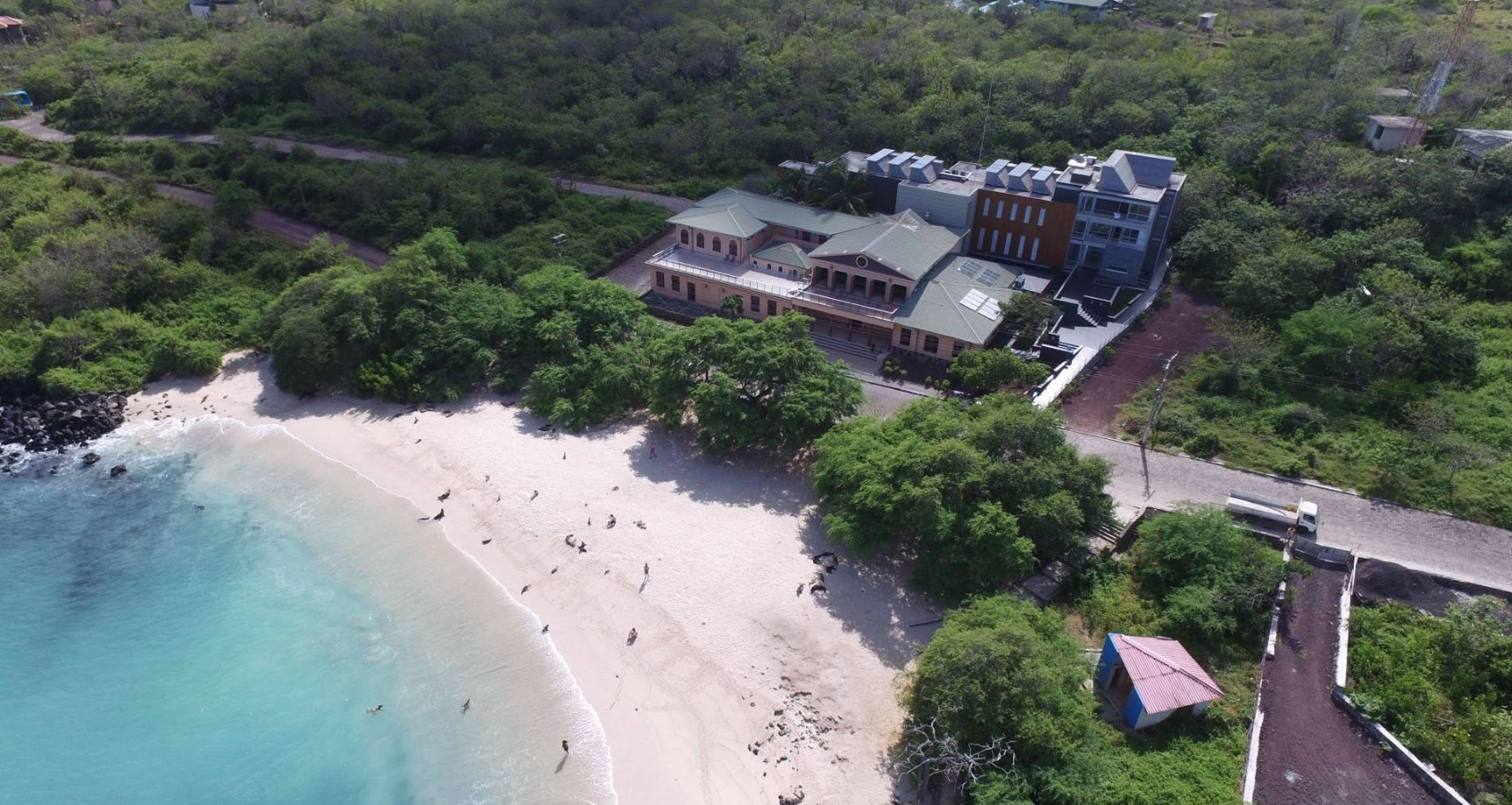
In 2022, the Galapagos Science Center (GSC) and the broader UNC & USFQ Galapagos Initiative will celebrate its 10th Anniversary. We are proud to announce the World Summit on Island Sustainability scheduled to be held on June 26–30, 2022 at the Galapagos Science Center and the Community Convention Center on San Cristobal Island.
The content of the World Summit will be distributed globally through social media and results documented through papers published in a book written as part of the Galapagos Book Series by Springer Nature and edited by Steve Walsh (UNC) & Carlos Mena (USFQ) as well as Jill Stewart (UNC) and Juan Pablo Muñoz (GSC/USC). The book will be inclusive and accessible by the broader island community including scientists, managers, residents, tourists, and government and non-government organizations.
While the most obvious goal of organizing the World Summit on Island Sustainability is to celebrate the 10th Anniversary of the GSC and the UNC-USFQ Galapagos Initiative, other goals will be addressed through special opportunities created as part of our operational planning of the World Summit.
For instance, we seek to elevate and highlight the Galapagos in the island conservation discourse, seeking to interact with other island networks in more obvious and conspicuous ways to benefit the Galapagos Islands, the UNC-USFQ Galapagos Initiative, and the world. We will seize the opportunity to further develop the I2N2 – International Islands Network-of-Networks. Further, we wish to highlight and emphasize multiple visions of a sustainable future for the Galapagos Islands and we cannot do this alone. Therefore, engaging the Ecuadorian Ministry of Environment, the Ministry of Tourism, the Government Council of Galapagos, the Galapagos National Park, and local Galapagos authorities, including government and non-government organizations and local citizen groups, is imperative.
Borrowing from Hawaii’s and Guam’s Green Growth Program and the Global Island Partnership, we wish to examine existing global programs that emphasize island sustainability and their incorporation into life, policies, and circumstances in the Galapagos Islands. We will also seek to enhance our connections with the institutional members of our International Galapagos Science Consortium and expand the Consortium through the recruitment of other member institutions. We will also work to benefit islands and their local communities by working with citizen groups as well as important NGOs who seek to improve the natural conditions in the Galapagos and diminish the impact of the human dimension on the future of Galapagos’ ecosystems.
Lastly, we will use the World Summit to benefit UNC & USFQ and our constituencies through a strong and vibrant communication plan about the World Summit, creating corporate relationships as sponsors, identifying funding goals through donors, and benefiting our study abroad program for student engagement in the Galapagos Islands. We plan to develop and issue a Galapagos Sustainability Communique after the World Summit that includes the vision and insights of all its participants for a sustainable Galapagos with applicability to global island settings.
We are eager to hear your perspective and have you join us at the World Summit on Island Sustainability!