
Photo: Hammerheads Darwin Jonathan
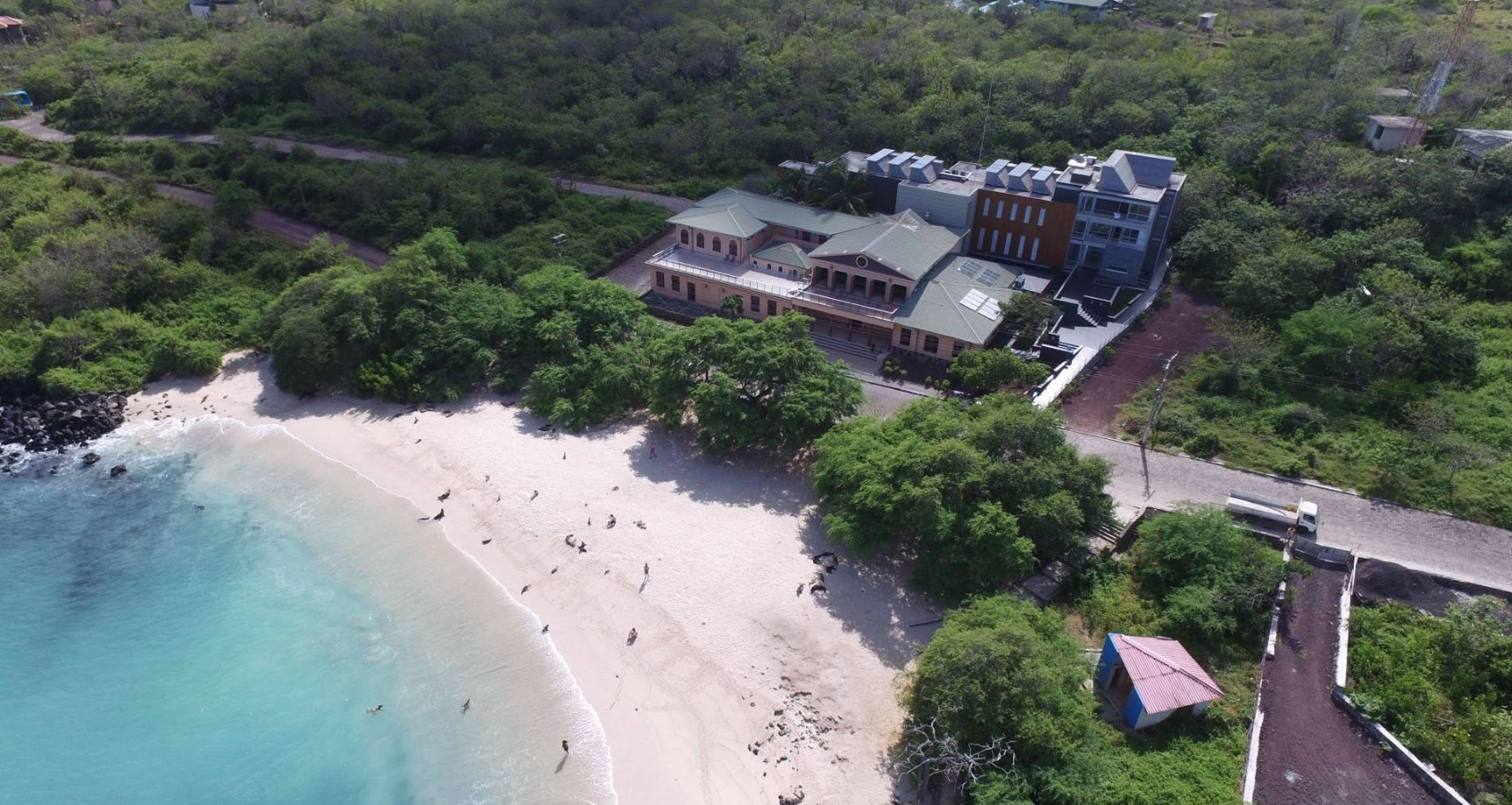
The Galapagos Science Center (GSC) is located on San Cristóbal Island and operates a 20,000-square-foot facility that brings together research, education and outreach in one location. The building houses five specialized laboratories:
Marine Sciences Laboratory, Human Health and Ecosystem Laboratory, Genomics Laboratory, Animal Health Laboratory Data Science and Visualization Laboratory, plus collaborative spaces for researchers, students and the local community.
Five cutting-edge laboratories. State-of-the-art facilities. One mission: science for a sustainable future.
Photo: Greenpeace
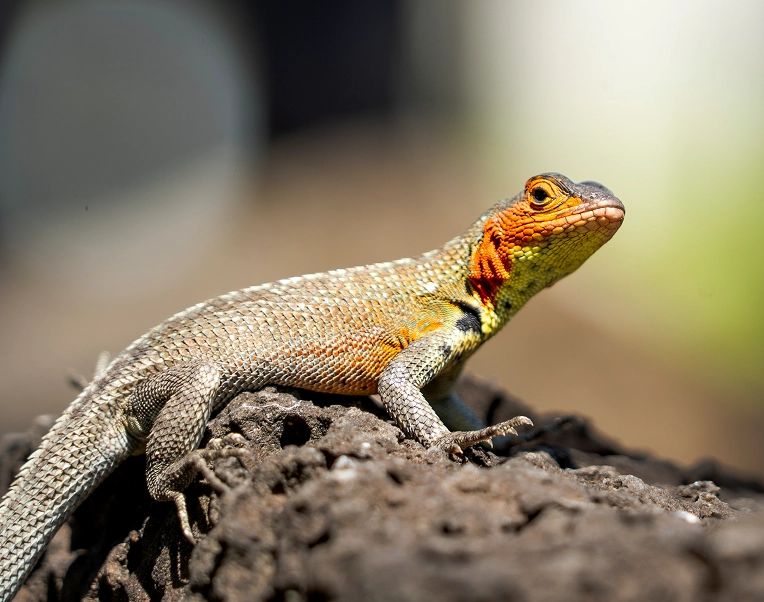
Advancing research through innovation and collaboration

The laboratory studies the interactions between the environment, humans, and organisms under the One Health approach, monitoring water, air, pathogens, and contaminants to identify health risks, with the goal of generating information that supports disease prevention and ecosystem conservation.

The laboratory studies the marine ecosystems of Galápagos, focusing on biodiversity, population dynamics, and the effects of climate change and human activities. It carries out ecological, fisheries, and genetic studies, as well as aquarium-based experiments. Its work provides valuable knowledge for the conservation and sustainable management of marine resources.

The laboratory conducts genetic and biodiversity studies of organisms, supported by advanced bioinformatics for metagenomics, population genetics, genome assembly, and phylogenetics. It also houses a biobank that preserves genetic samples under high ethical standards and strict traceability.

The laboratory uses spatial modeling, remote sensing, and cartography to analyze the territory and ecosystems of Galápagos. It provides geospatial analysis, data visualization, and services such as GIS, remote sensing, image processing, 3D modeling, and training.
The laboratory strengthens surveillance, diagnostics, and the conservation of Galápagos wildlife under the One Health approach. It includes histopathology and
necropsy areas to analyze samples and assess the health of wildlife, supported by specialized infrastructure and biosafety systems. It will be a strategic resource for the Galápagos National Park, improving emergency response and biodiversity management.
Beyond the laboratories, the GSC facility includes multiple spaces designed to foster interaction between scientists, students and communities:
The meeting room connects GSC researchers and its staff to international science collaborators to advance science.
Teleconference and monitor, including conference table with seating for 20 people
20 people
The community hall is a hybrid space used for study abroad courses, citizen science projects, or to disseminate research findings to the local community. Projector, speaker and seating for maximum 30 people, including a back outdoor patio área
30 people
Where Research Meets the Island
Photo: Romina Cox
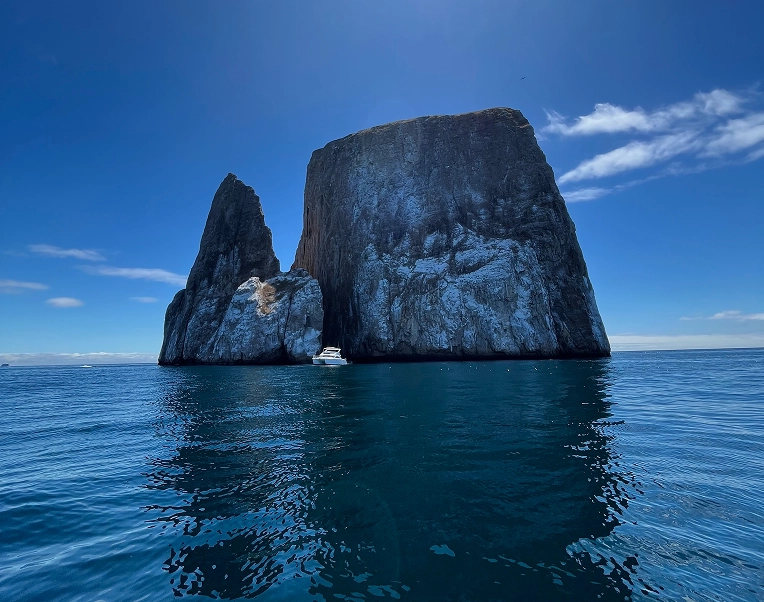
Sustainability & Impact
From the beginning, the design and construction of the GSC facility were guided by sustainability: the building is supported on piles to minimise disturbance to natural rocky soil; a pre-galvanised metal structure was built off-site, reducing noise and waste; and future plans include solar panels and wastewater recycling.
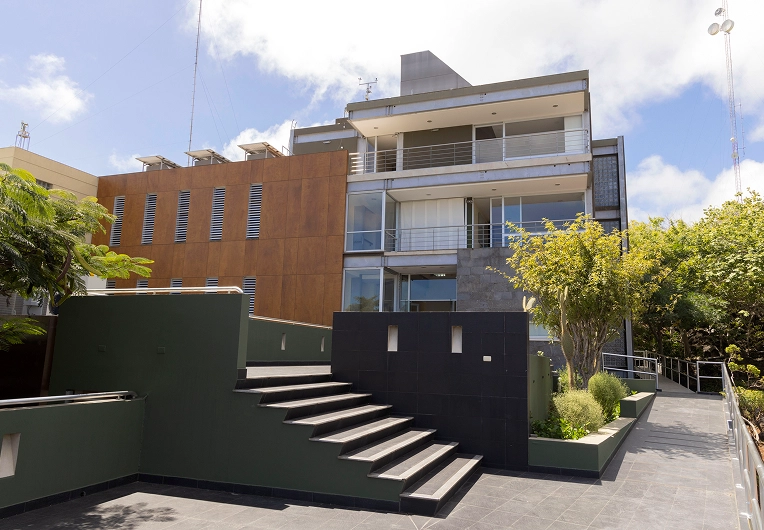
Photo: Sofía Green
Join Our Mission
| Cookie | Duration | Description |
|---|---|---|
| cookielawinfo-checkbox-analytics | 11 months | This cookie is set by GDPR Cookie Consent plugin. The cookie is used to store the user consent for the cookies in the category "Analytics". |
| cookielawinfo-checkbox-functional | 11 months | The cookie is set by GDPR cookie consent to record the user consent for the cookies in the category "Functional". |
| cookielawinfo-checkbox-necessary | 11 months | This cookie is set by GDPR Cookie Consent plugin. The cookies is used to store the user consent for the cookies in the category "Necessary". |
| cookielawinfo-checkbox-others | 11 months | This cookie is set by GDPR Cookie Consent plugin. The cookie is used to store the user consent for the cookies in the category "Other. |
| cookielawinfo-checkbox-performance | 11 months | This cookie is set by GDPR Cookie Consent plugin. The cookie is used to store the user consent for the cookies in the category "Performance". |
| viewed_cookie_policy | 11 months | The cookie is set by the GDPR Cookie Consent plugin and is used to store whether or not user has consented to the use of cookies. It does not store any personal data. |
In 2022, the Galapagos Science Center (GSC) and the broader UNC & USFQ Galapagos Initiative will celebrate its 10th Anniversary. We are proud to announce the World Summit on Island Sustainability scheduled to be held on June 26–30, 2022 at the Galapagos Science Center and the Community Convention Center on San Cristobal Island.
The content of the World Summit will be distributed globally through social media and results documented through papers published in a book written as part of the Galapagos Book Series by Springer Nature and edited by Steve Walsh (UNC) & Carlos Mena (USFQ) as well as Jill Stewart (UNC) and Juan Pablo Muñoz (GSC/USC). The book will be inclusive and accessible by the broader island community including scientists, managers, residents, tourists, and government and non-government organizations.
While the most obvious goal of organizing the World Summit on Island Sustainability is to celebrate the 10th Anniversary of the GSC and the UNC-USFQ Galapagos Initiative, other goals will be addressed through special opportunities created as part of our operational planning of the World Summit.
For instance, we seek to elevate and highlight the Galapagos in the island conservation discourse, seeking to interact with other island networks in more obvious and conspicuous ways to benefit the Galapagos Islands, the UNC-USFQ Galapagos Initiative, and the world. We will seize the opportunity to further develop the I2N2 – International Islands Network-of-Networks. Further, we wish to highlight and emphasize multiple visions of a sustainable future for the Galapagos Islands and we cannot do this alone. Therefore, engaging the Ecuadorian Ministry of Environment, the Ministry of Tourism, the Government Council of Galapagos, the Galapagos National Park, and local Galapagos authorities, including government and non-government organizations and local citizen groups, is imperative.
Borrowing from Hawaii’s and Guam’s Green Growth Program and the Global Island Partnership, we wish to examine existing global programs that emphasize island sustainability and their incorporation into life, policies, and circumstances in the Galapagos Islands. We will also seek to enhance our connections with the institutional members of our International Galapagos Science Consortium and expand the Consortium through the recruitment of other member institutions. We will also work to benefit islands and their local communities by working with citizen groups as well as important NGOs who seek to improve the natural conditions in the Galapagos and diminish the impact of the human dimension on the future of Galapagos’ ecosystems.
Lastly, we will use the World Summit to benefit UNC & USFQ and our constituencies through a strong and vibrant communication plan about the World Summit, creating corporate relationships as sponsors, identifying funding goals through donors, and benefiting our study abroad program for student engagement in the Galapagos Islands. We plan to develop and issue a Galapagos Sustainability Communique after the World Summit that includes the vision and insights of all its participants for a sustainable Galapagos with applicability to global island settings.
We are eager to hear your perspective and have you join us at the World Summit on Island Sustainability!