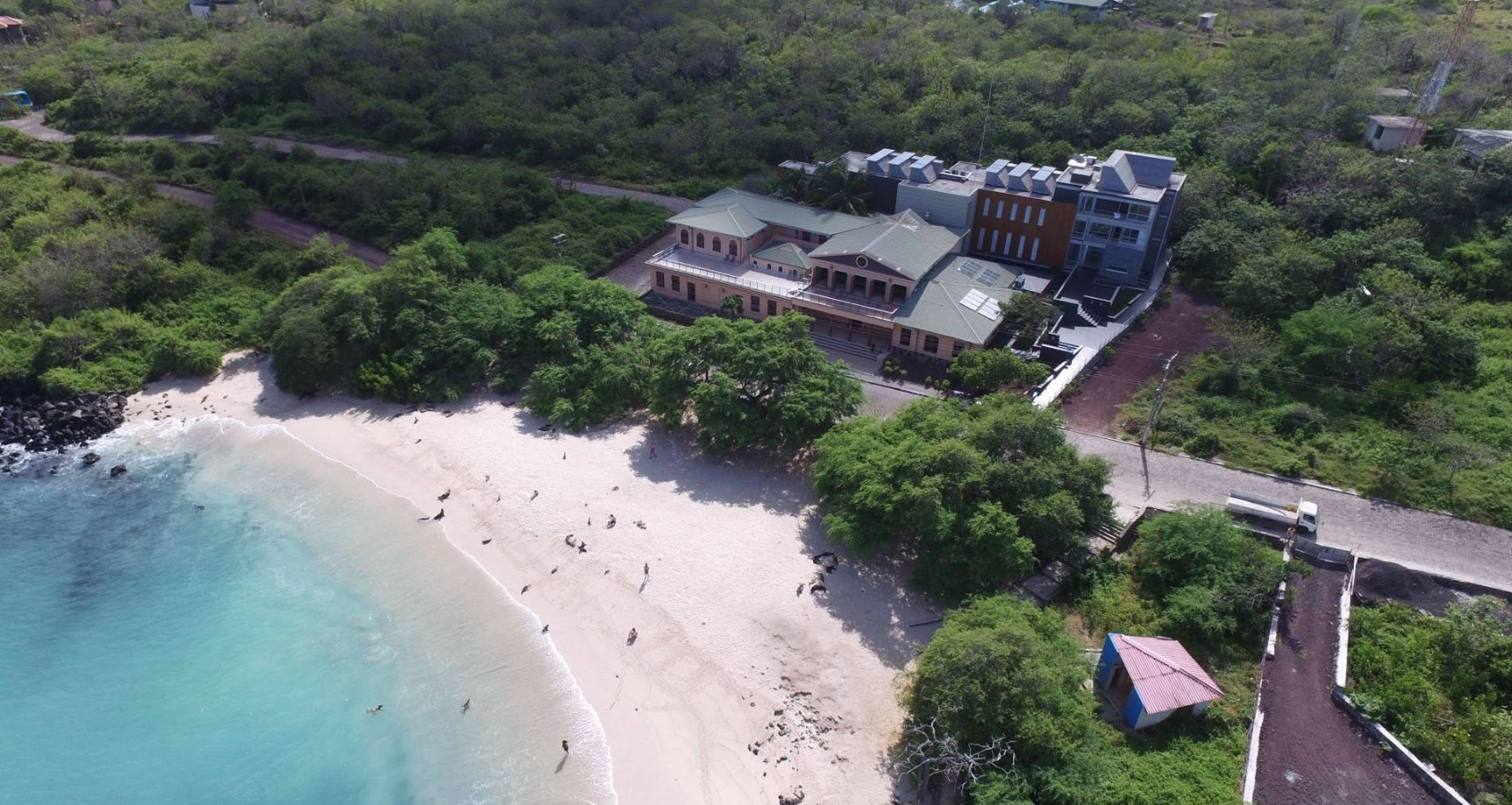
Anthropogenic emission inventory and spatial analysis of greenhouse gases and primary pollutants for the Galapagos Islands
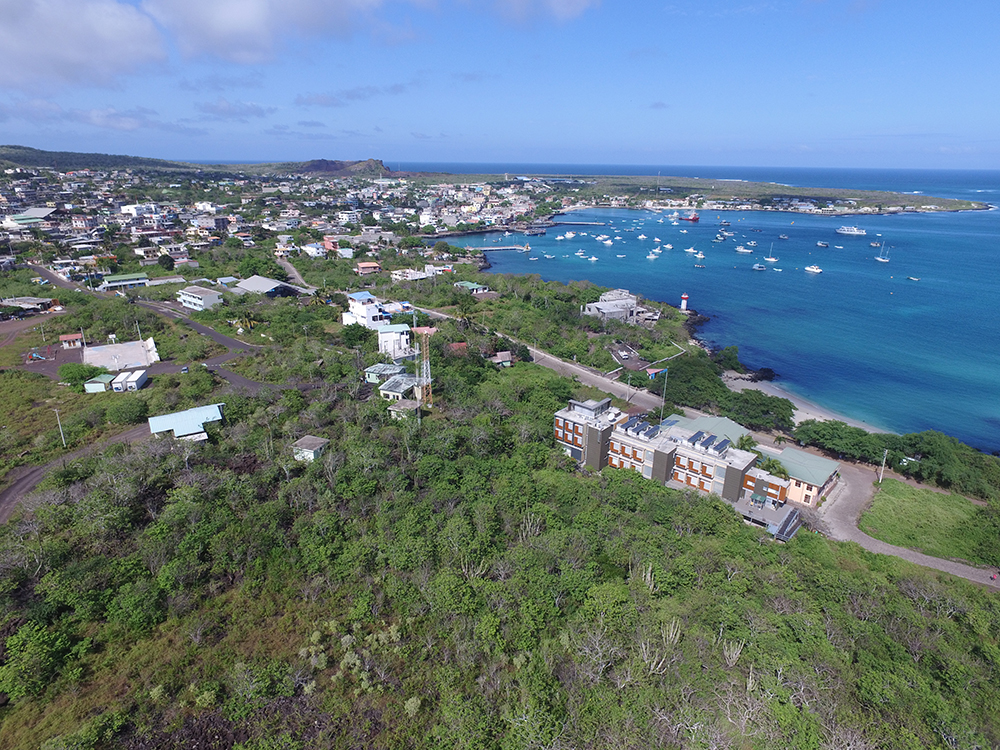
We present an anthropogenic emissions inventory for Santa Cruz, San Cristobal, and Isabela Islands in which emissions were spatially mapped for greenhouse gasses and primary pollutants.
The Scalesia microbiome: uncovering the microbial world that Darwin could not see
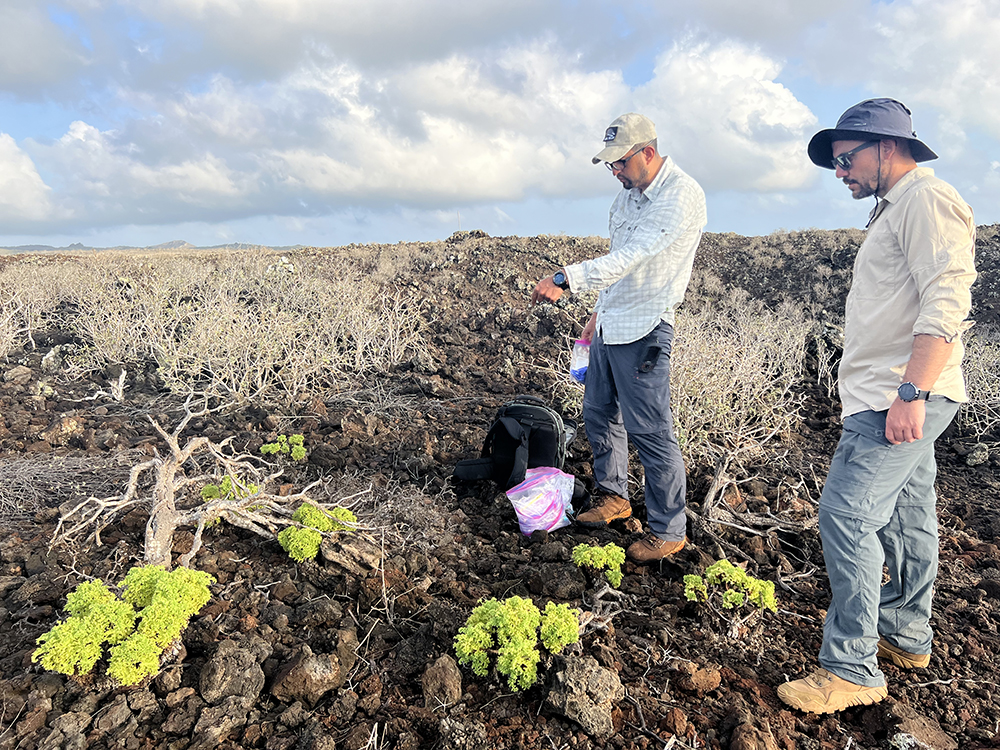
Galápagos keeps inspiring scientists to study the evolution of animal species.The ‘Scalesia Microbiome’ project is pioneering in studying the taxonomic and functional diversity of the microbial communities associated with the Scalesia genus on the Galapagos Islands.
Underwater ultrasonograhy and blood sampling provide the first observations of reproductive biology in free-swimming whale sharks
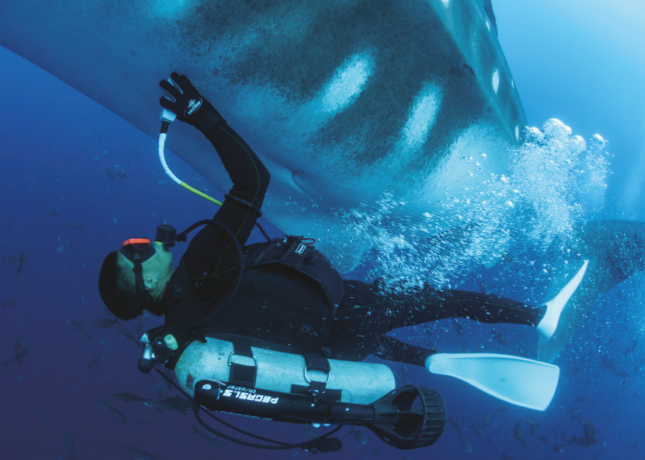
We report on a non-invasive technique for observing the reproductive states of wild, free-swimming whale sharks Rhincodon typus for the first time.
Species associated with whale sharks in the Galapagos Archipelago
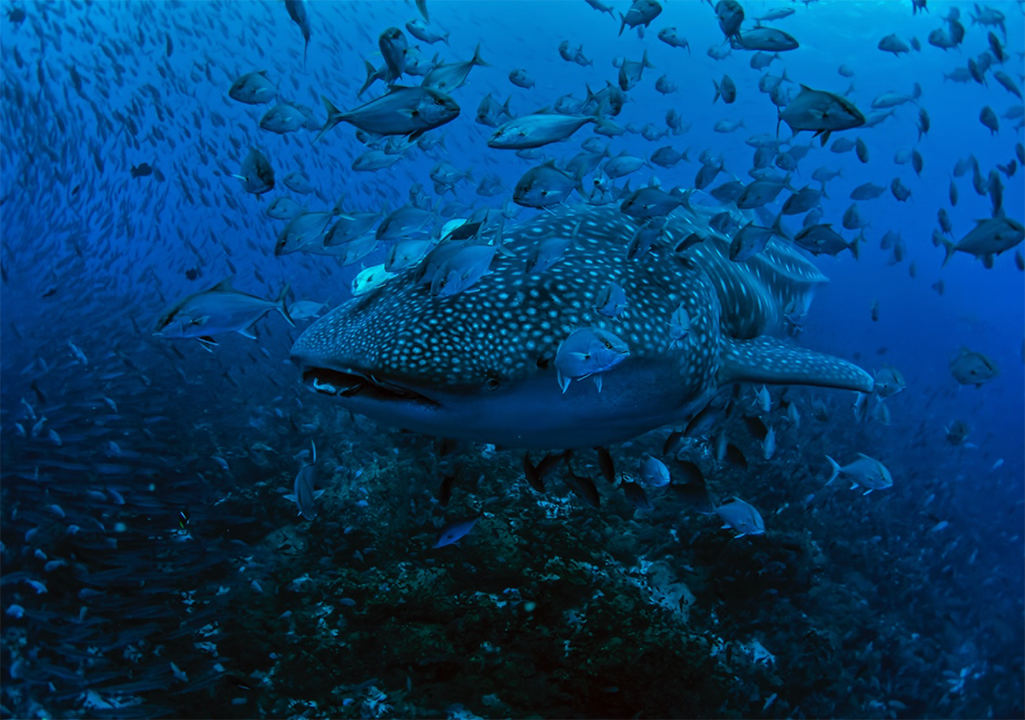
Whale sharks Rhincodon typus frequently appear to interact or associate with other species, which vary depending on the community structure and the demographic of the whale sharks at each location globally. we present the species sighted frequently around whale sharks in the Galapagos Archipelago
A pilot study to estimate the population size of endangered Galápagos marine iguanas using drones
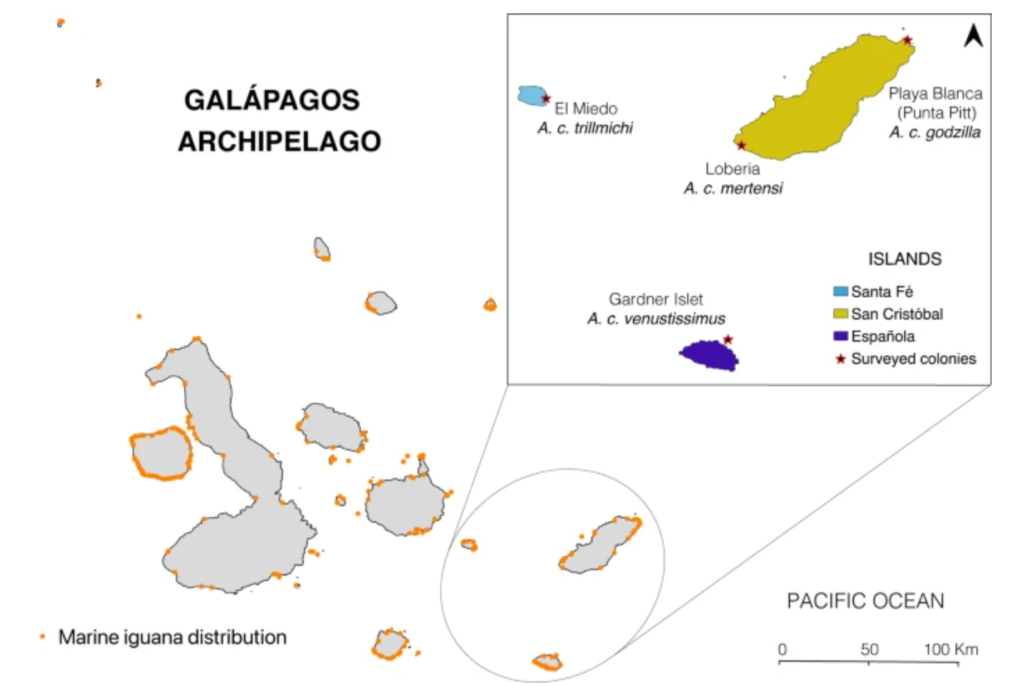
Large-scale species monitoring remains a significant conservation challenge. Given the ongoing biodiversity crisis, the need for reliable and efficient methods has never been greater.
The Connecting With Nature Program has successfully integrated the Galapagos community into environmental conservation for the fourth consecutive year
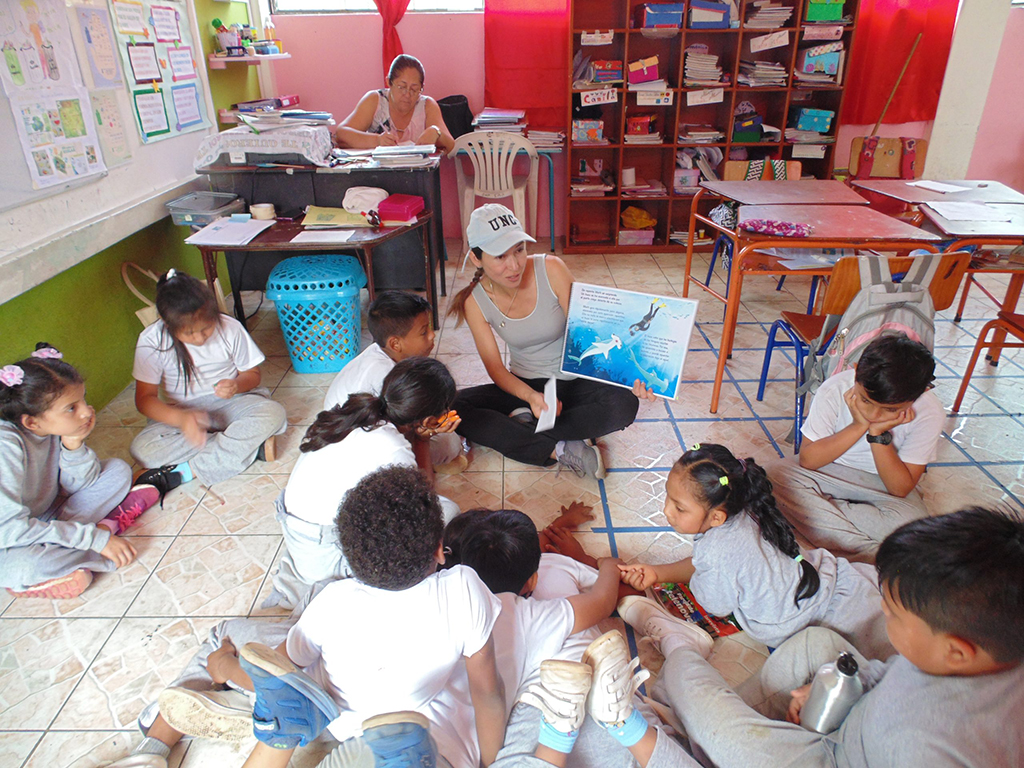
Through its community programs, the GSC contributes to the development and the generation of environmental awareness in the community.
Galapagos and the plastic problem
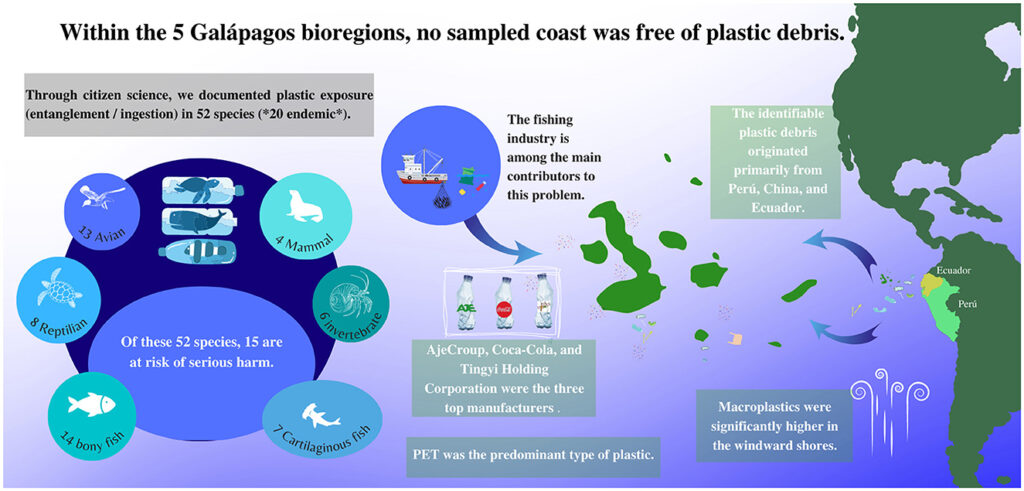
Plastic pollution (PP) is an ongoing, pervasive global problem that represents a risk to the Galápagos archipelago, despite it being one of the world’s most pristine and well-protected regions. By working closely with citizen scientists, we aimed to quantify and map the magnitude and biological effects of PP.
Learn About The Main Achievements of The Galapagos Science Center During 2022.
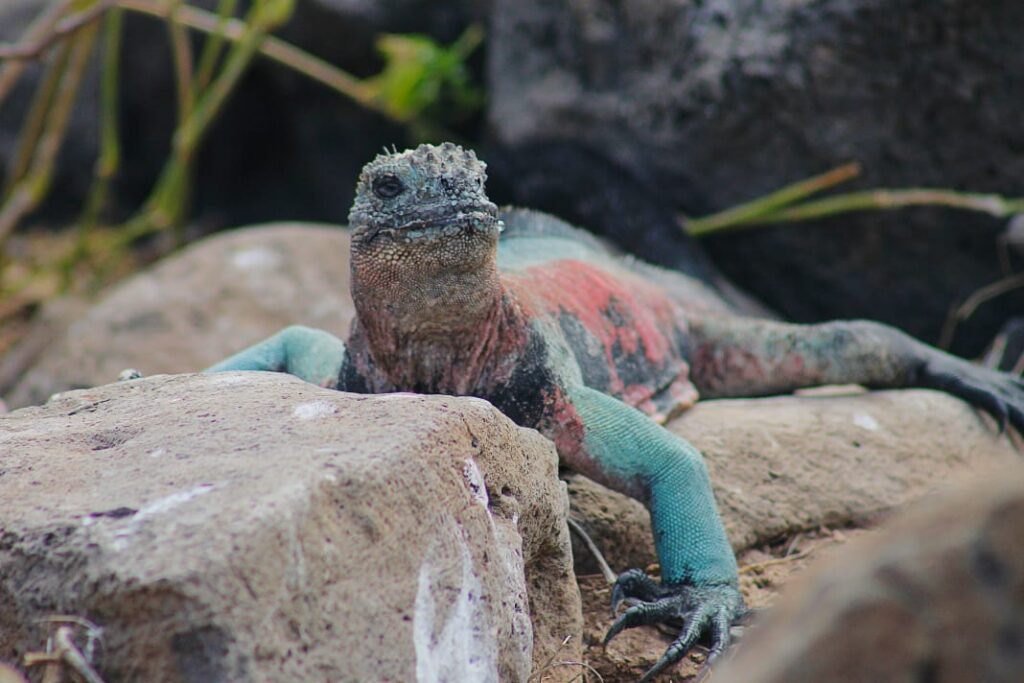
Our entire team at the Galapagos Science Center would like to wish you a very happy and prosperous New Year! We are proud to share with you a compilation of the meaningful work carried out during 2022 and hope you enjoy learning more about our projects aimed to benefit the Galapagos Islands.
Team of researchers from Galapagos Science Center and Galapagos National Park seek to protect marine biodiversity and understand climate variability through marine expedition
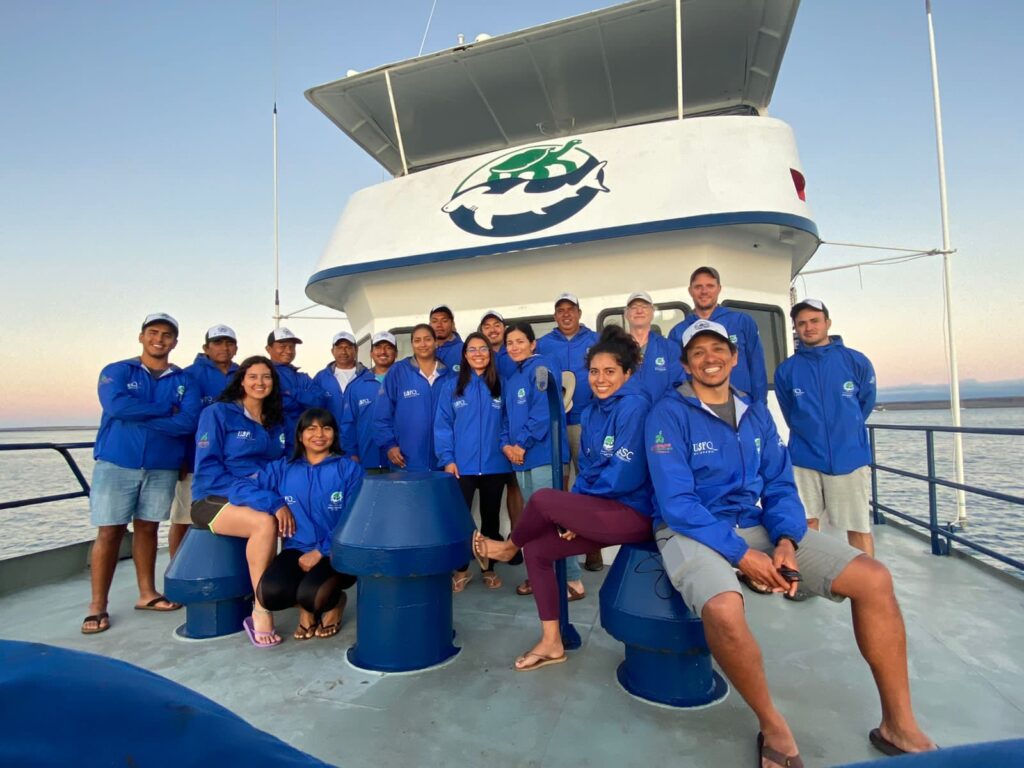
Learn about the objectives, methods, and preliminary results the team has carry on since the project started.
Burdens of Paradise

A broad study looking at food and water insecurity in the Galápagos brings together a team of researchers to focus on an often-overlooked population. Miller’s research is part of a broader study run by biological anthropologist Amanda Thompson through the Galápagos Science Center (GSC). It represents a collaboration between researchers from UNC-Chapel Hill and Universidad San Francisco de Quito (USFQ).