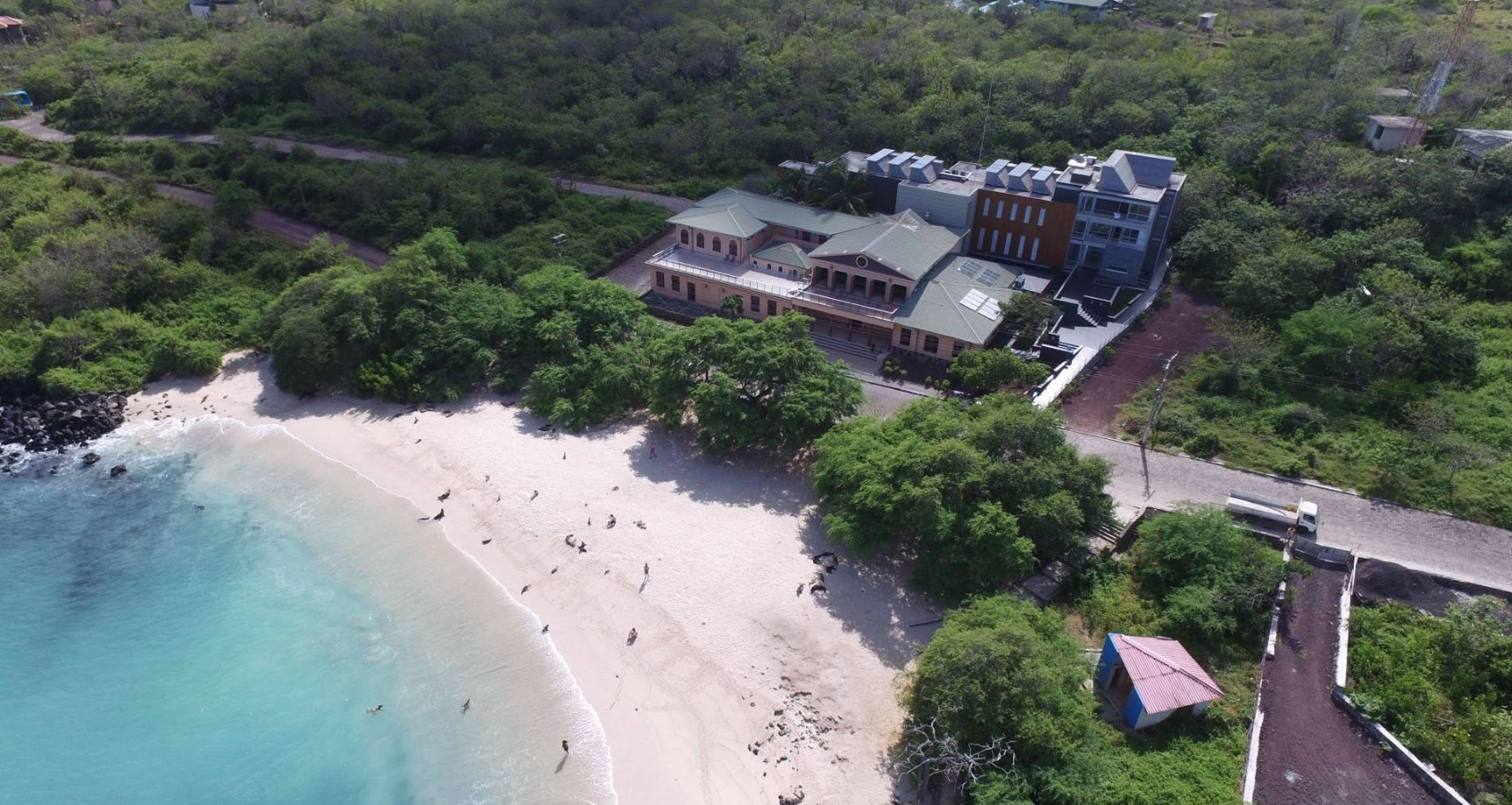
New collaborations and citizen science to better understand cetaceans in the Galapagos
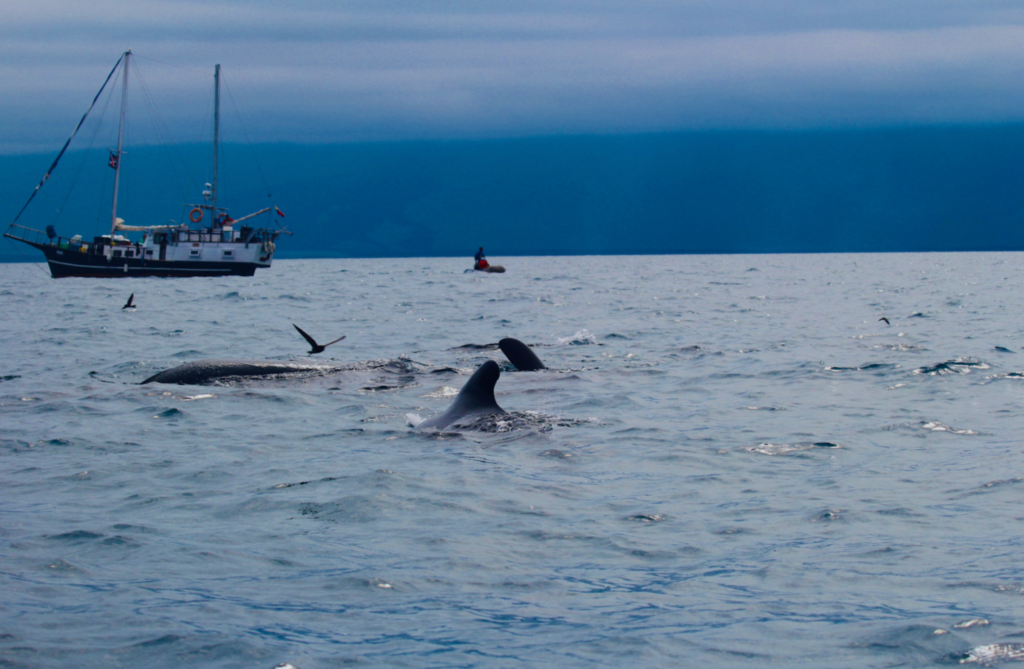
In the fall of 2021, Dani Alarcón, a researcher from the Galapagos Science Center, and Hector Guzman, senior scientist from the Smithsonian Tropical Research Institute, first set out to tag blue whales off the coast of the Galapagos Islands.
The Presence of Dirofilaria immitis in Domestic Dogs on San Cristobal Island, Galapagos
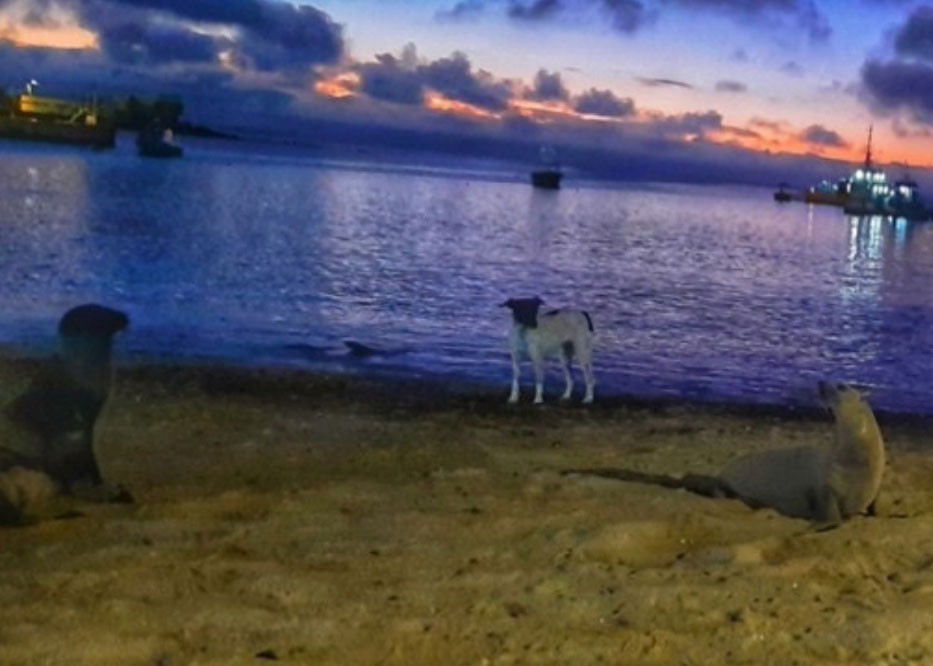
This study’s concept was outlined around the principle of conservation medicine in a biodiversity hotspot from the Neotropical realm: the Galapagos Islands.
Exploring the genetic diversity and population structure of Mobula birostris in two key aggregation zones in the Eastern Tropical Pacific
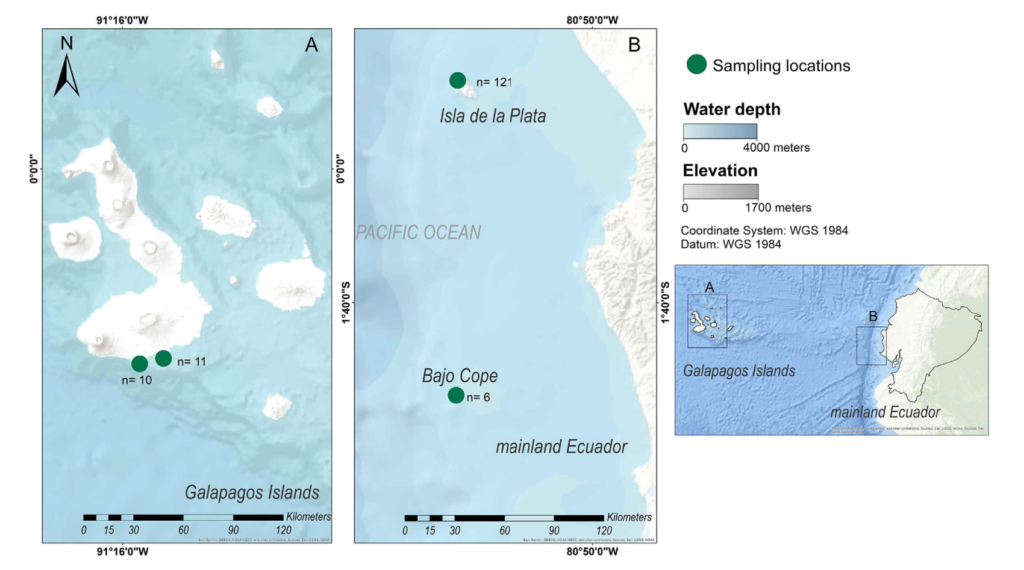
The giant manta ray Mobula birostris is the largest ray species in the world. Little is known about its genetic composition.
Intraocular pressure using rebound tonometry in the San Cristobal Galapagos tortoise (Chelonoidis chathamensis)
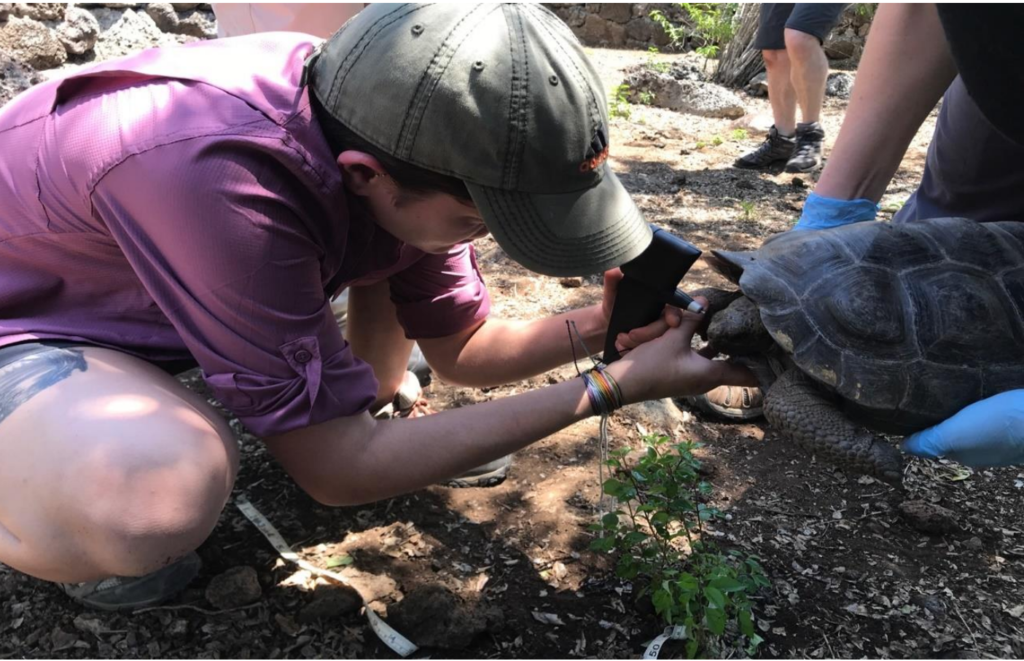
The goal of this study was to determine if intraocular pressure could be accurately assessed and to create a baseline measurement for intraocular pressure in Galápagos tortoises.
Ecuador contributes to the NASA SHADOZ network with 36 probes per year through the USFQ Atmospheric Measurement Station
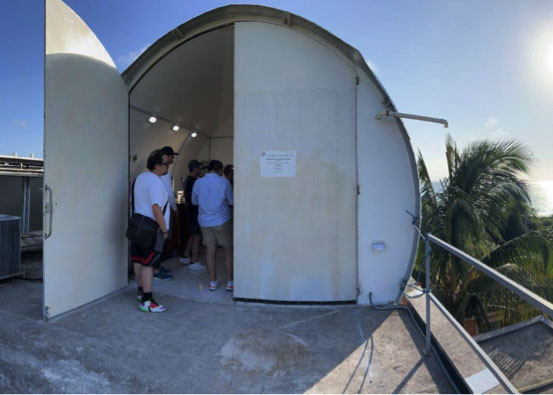
The Universidad San Francisco de Quito (USFQ) has the Atmospheric Research Institute (IIA), which conducts surveys of the ozone layer from its Atmospheric Measurement Station (EMA).
Southern Elephant Seals (Mirounga leonina) in the Galapagos Islands and the Eastern Tropical Pacific Amid Ocean Environmental Changes: Towards a Habitat Suitability Index
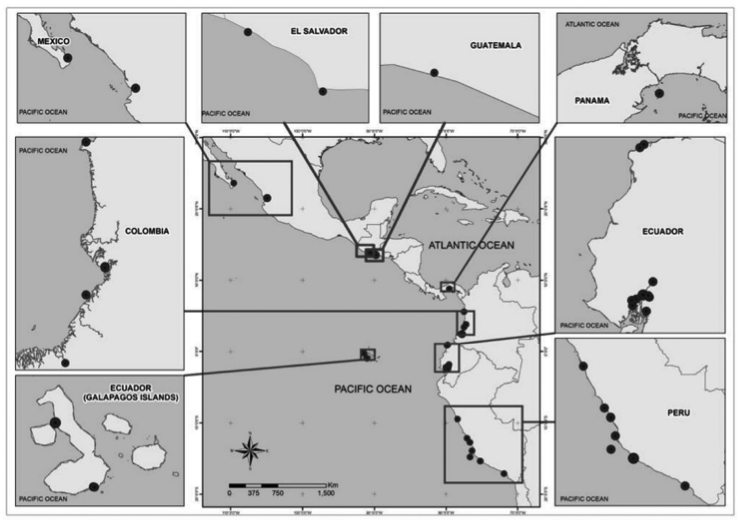
he southern elephant seal (SES; Mirounga leonina) is the largest, sexually dimorphic pinniped species in the global ocean.
A team of student journalists from UNC Hussman School of Journalism will develop stories about the community of Puerto Baquerizo Moreno in the Galapagos
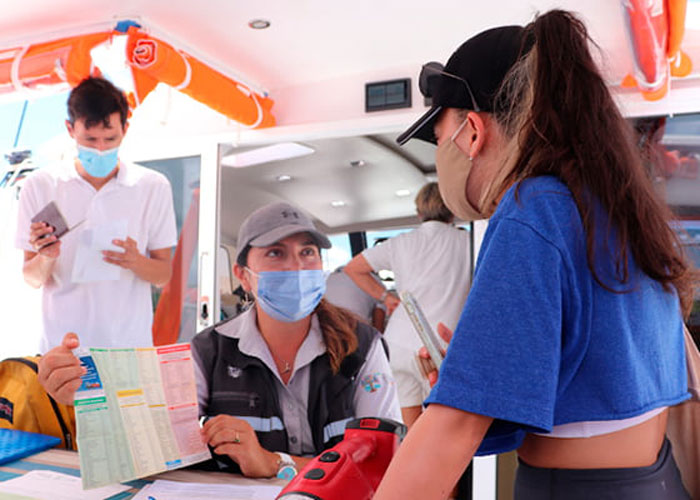
Journalist and professor Patrick Davison led a group of students to visit San Cristobal Island, Galapagos as part of the UNC Global Storytelling program.
First Ever Maps of AgroEcosystems in Galapagos by UNC and USFQ Researchers
What percentage of land cover is dominated by invasive plants in the highlands of the four inhabited Galapagos Islands? It´s 28.5% according to new maps generated by an international research team based between the UNC at Chapel Hill, USFQ in Quito and GSC.