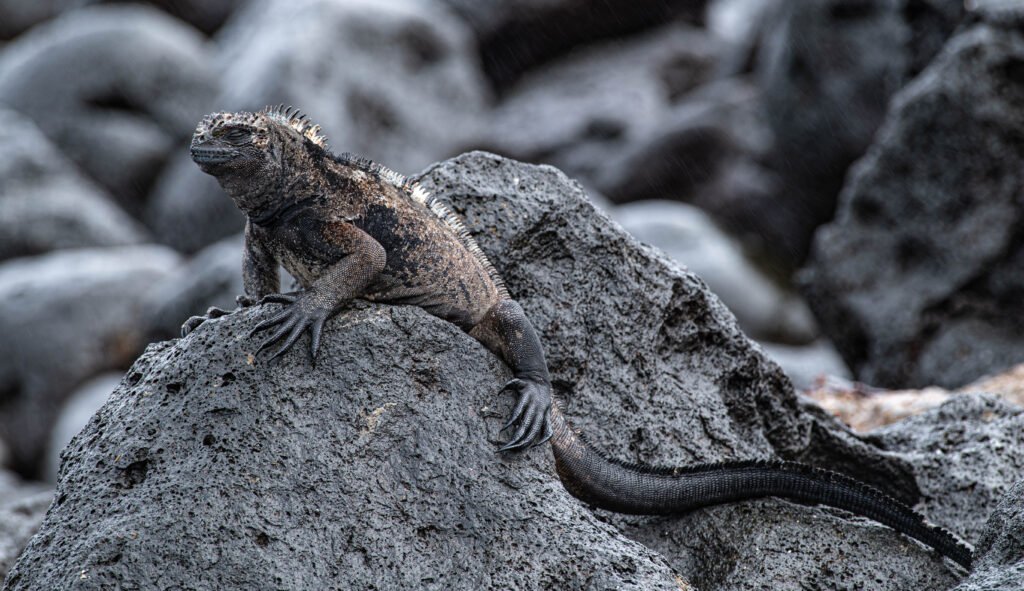
Marine iguanas of the Galápagos (Amblyrhynchus cristatus) are the only lizard species in the world that feeds in the ocean, relying almost exclusively on algae for sustenance. However, during El Niño events, rising ocean temperatures reduce algae availability, creating periods of food scarcity that can affect their physical condition and survival. In this context, the study examines how these climatic events influence the physiology and body condition of this species.
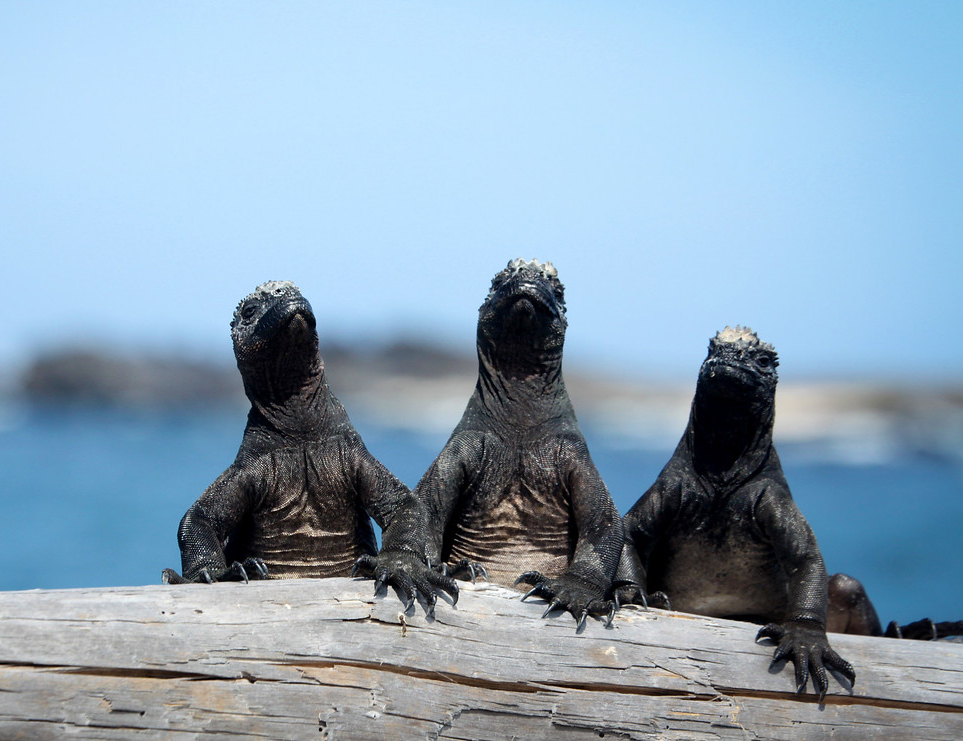
The objective of the research was to evaluate changes in body condition and resting metabolic rate in marine iguanas following an El Niño year, compared to a year without this phenomenon. Researchers measured variables such as body mass, length, body thickness, and resting energy expenditure in juvenile and subadult individuals. This methodology allowed the identification of physiological differences associated with reduced food availability during periods of ocean warming.

The results showed that after an El Niño year, marine iguanas exhibited lower body mass, reduced body thickness, and a significant decrease in metabolic rate. These findings suggest that the species not only loses weight during food shortages but also lowers its energy expenditure as an adaptive strategy. While this physiological response may enhance survival under adverse conditions, the increasing frequency and intensity of climate-related events could have long-term impacts on growth, reproduction, and population dynamics.
Read the article here: https://journals.biologists.com/jeb/article/228/17/jeb250907/369070/Marine-iguanas-have-lower-metabolic-rates-during