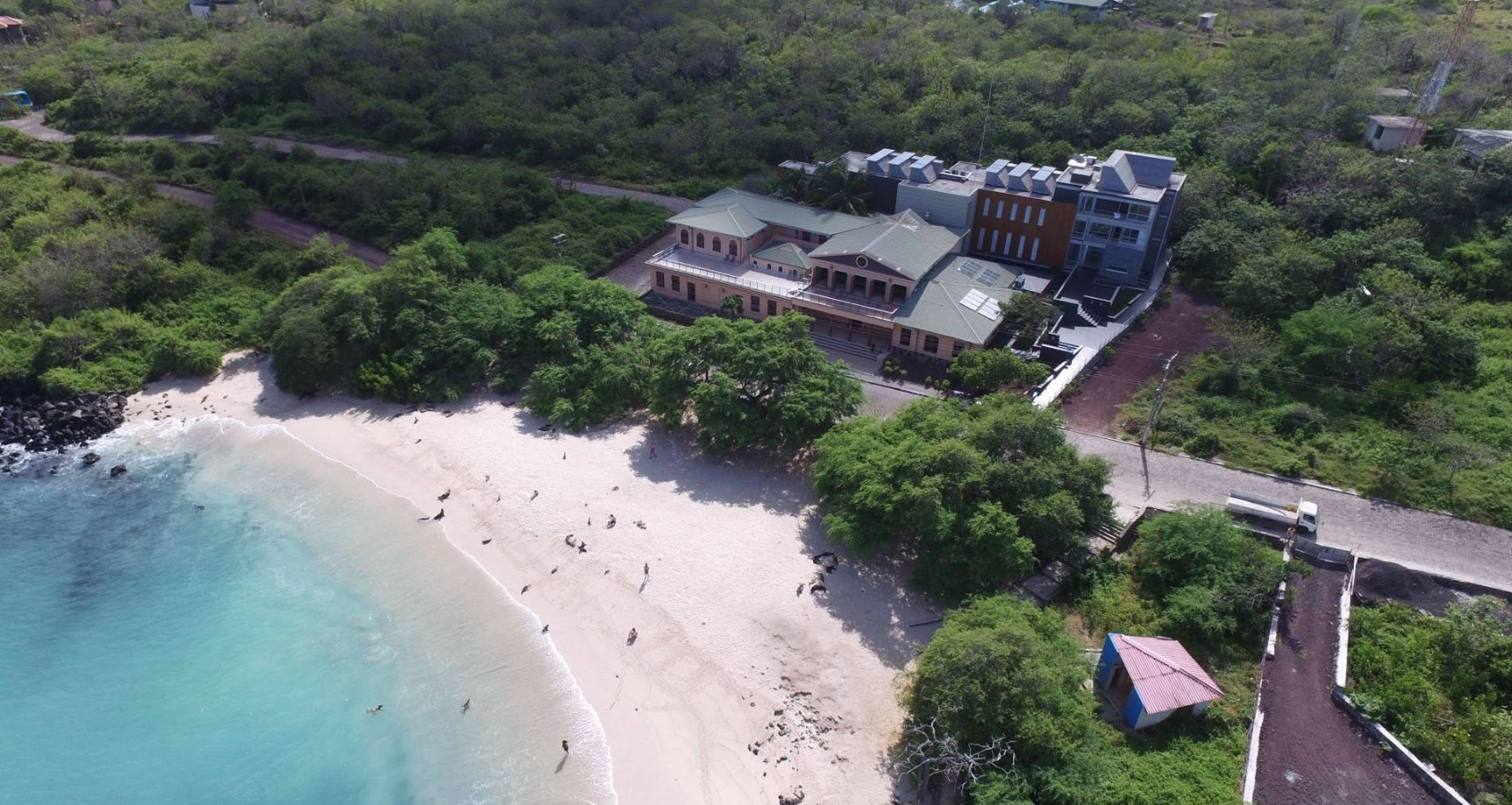
Scientific publication analyzing the presence of Bluetongue virus and epizootic hemorhagic disease in cattle on Galapagos
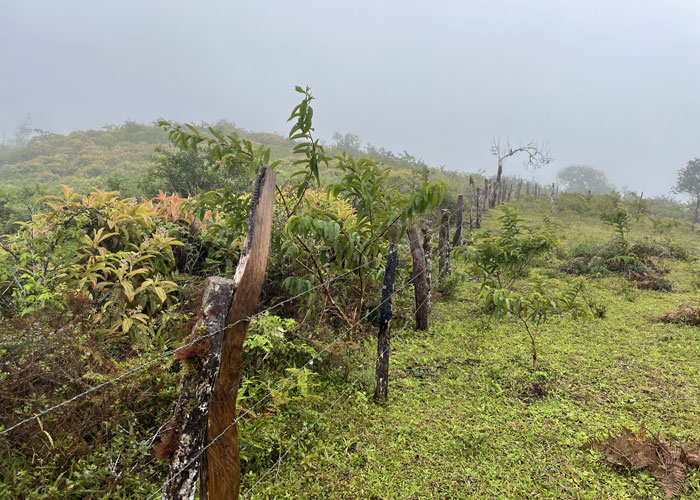
Researchers from the USFQ, led by Rommel Vinueza, profesor from the School of Veterinarian Medicine surveyed 410 heads of cattle to analyze the presence of two common diseases.
Investigadores de GSC participan en el Simposio de Tortugas Marinas Ecuador 2018
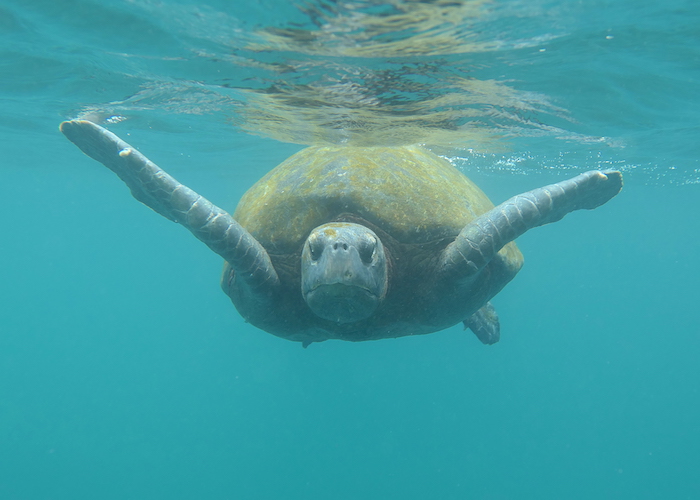
Los días 4 y 5 de diciembre 2018 cuatro investigadores de Galápagos presentaron en el Simposio de Tortugas Marinas – Ecuador 2018 en la ciudad de Santa Elena. Juan Pablo Muñoz-Pérez, Daniela Alarcón-Ruales, Jason Castañeda, Silvia Rebeca Zavala participaron.
Scientific publicaton on the San Cristobal lava lizard (Microlophus bivittatus)
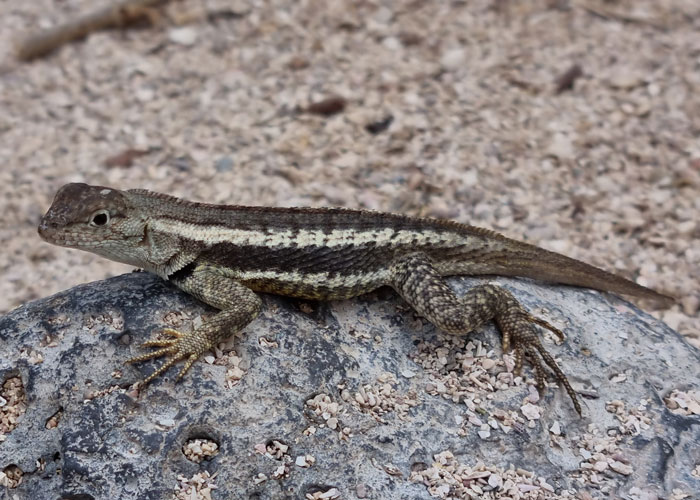
Haematology and biochemistry of the San Cristóbal Lava Lizard (Microlophus bivittatus) The San Cristóbal lava lizard, is one of nine species of lava lizards endemic to the Galápagos Islands of Ecuador. No information presently exists about baseline health parameters for any of these species.
A new book from the Series “Social and Ecological Interactions in the Galapagos Islands” has been published
A new book edited by María de Lourdes Torres and Carlos Mena has been published by Springer. This book is the seventh in the Series “Social and Ecological Interactions in the Galapagos Islands”.
Urban Land Cover Change in Ecologically Fragile Environments: The Case of the Galapagos Islands
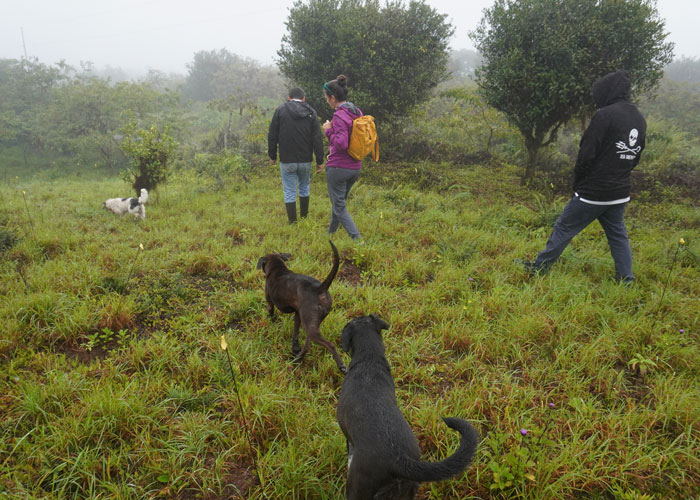
Fátima L. Benítez, Carlos F. Mena, Leo Zurita-Arthos
The Galapagos Islands are a unique sanctuary for wildlife and have gone through a fluctuating process of urbanization in the three main inhabited islands.
Two new publications in Herpetological Review, about Galápagos lizards
Congratulations to Carlos A. Valle, Professor and Researcher of the Universidad San Francisco de Quito & Juan Pablo Muñoz, Administrator and Researcher of the Galapagos Science Center for the two new publications about Microlophus bivittatus (San Cristóbal Lava Lizard) diet and about Microlophus indefatigabilis (Lava Lizard) diet.
Galapagos Science Center researchers are co-authors of a new paper about the critically endangered populations of Hawksbill turtles.
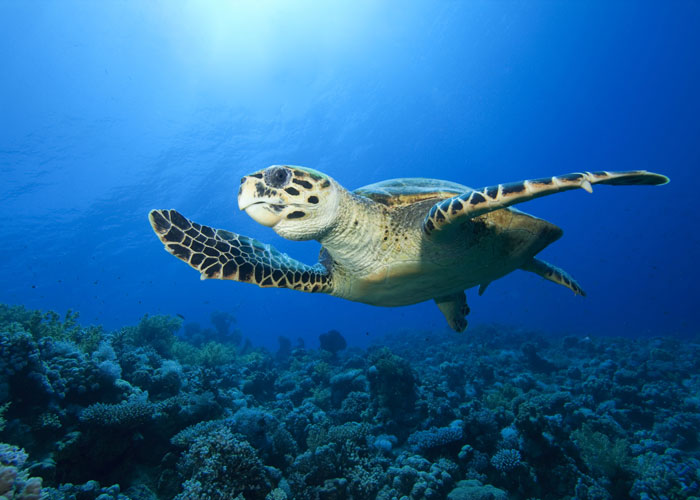
The article is a new contribution to knowledge for the conservation of the critically endangered populations of this species in the eastern Pacific Ocean. Published by the Marine Ecology Progress Series.
New Publication from the Galapagos Science Center
Fernando J. Astudillo, from the Galapagos Science Center, is the author of the article “Soil phytoliths as indicators of initial human impact on San Cristóbal Island, Galápagos” published by Elsevier in the peer-reviewed scientific journal Palaeogeography, Palaeoclimatology, Palaeoecology.
Community Outreach
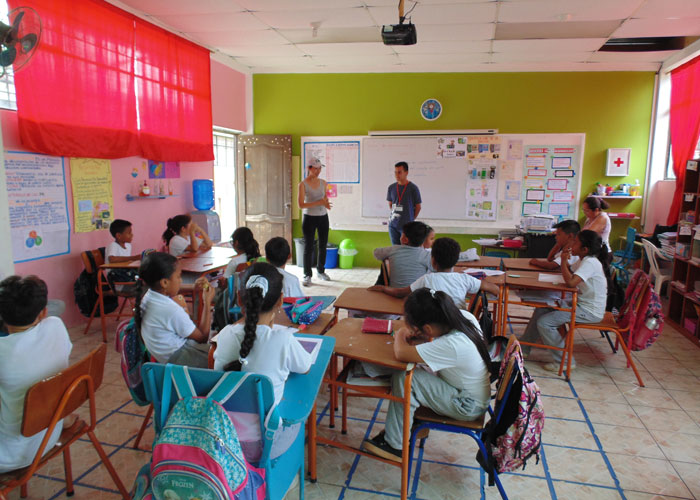
One of the fundamental pillars of the Galapagos Science Center (GSC) is the engagement with the community of San Cristobal and Galapagos in general. The problem is focused on that, traditionally, investigation in Galapagos has been done in a way where the community is separated from the research process; and in most cases, serving only as administrative support or for logistics.
The Galapagos Bullhead Shark Project
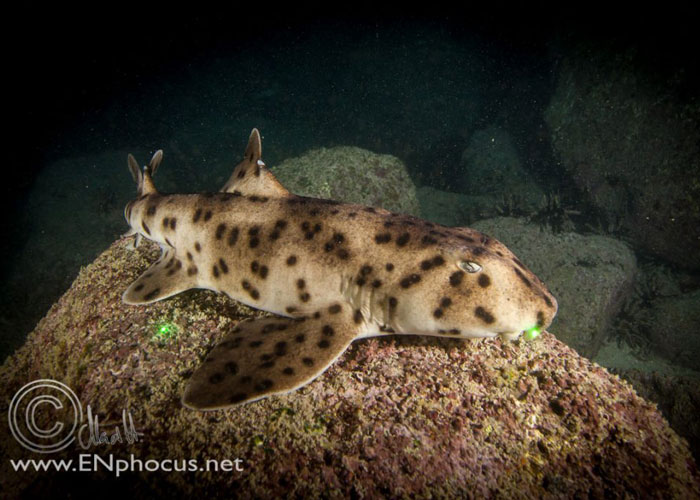
The Galapagos Bullhead shark is found across the Galápagos archipelago and in the northern coast of Peru but very little is known about this species. We know that they live in shallow tropical waters around continental and insular shelves. They carry out their life as bottom dwellers, where they blend in well with their habitat