Investigación, diagnóstico y conservación para proteger la fauna silvestre de Galápagos.
El laboratorio integra investigación, educación y vinculación con la comunidad mediante un enfoque interdisciplinario. Su objetivo es fortalecer la vigilancia, el diagnóstico, el monitoreo y los esfuerzos de conservación en Galápagos bajo el enfoque “Una Salud” (One Health), que promueve la salud de las personas, los animales y los ecosistemas.
Además, la misión de este laboratorio es avanzar en la gestión de la investigación científica y mejorar la respuesta ante emergencias de salud de la fauna silvestre en la isla San Cristóbal y, cuando sea necesario, en todo el archipiélago de Galápagos.
One Health en acción
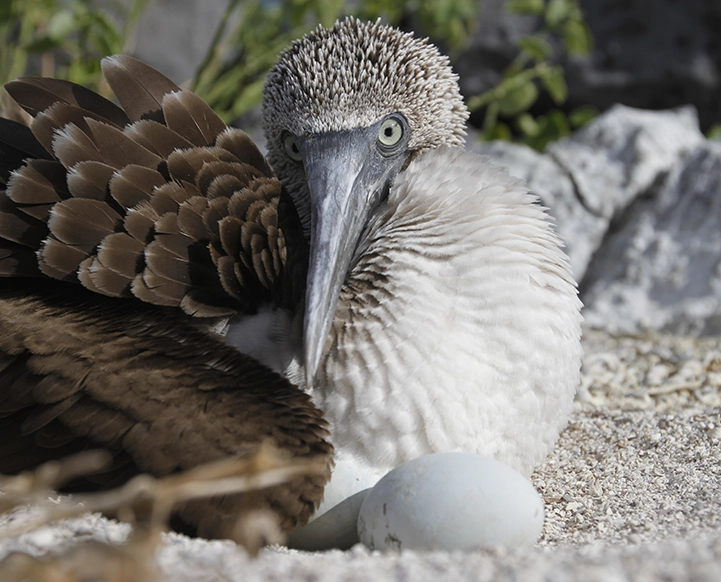
Photo: Andrew Russell
Este proyecto posicionará a la USFQ–GSC como un socio estratégico clave de la Dirección del Parque Nacional Galápagos, garantizando que todas las actividades del laboratorio cumplan con los más altos estándares técnicos, rigurosos protocolos de bioseguridad y el pleno cumplimiento de las normativas ambientales y sanitarias vigentes.
La operación del laboratorio se centra en dos áreas principales:
Laboratorio de Histopatología: En esta área se procesarán y analizarán muestras biológicas (incluyendo tejidos fijados en formalina, sangre, suero y extendidos citológicos) para diagnósticos histológicos, hematológicos y bioquímicos.
Laboratorio de Necropsias: Esta área apoyará los exámenes post-mortem de especies como aves, peces, reptiles, mamíferos e invertebrados, utilizando procedimientos estandarizados de necropsia y recolección de muestras para análisis posteriores.
La infraestructura incluye equipos especializados, sistemas de extracción y filtración de aire con filtros HEPA, manejo de aguas residuales mediante biofiltros, una cámara de inspección para el control de aguas residuales y luces UV para la esterilización y desinfección del espacio, así como insumos y equipo de protección personal (EPP) que garantizan la seguridad de los procedimientos y del personal.
En el futuro, se espera que el laboratorio incorpore equipos para análisis histopatológico, incluyendo un procesador de tejidos, una estación de inclusión en parafina, un micrótomo, equipos de tinción y un microscopio con cámara, además de los sistemas adecuados de seguridad y almacenamiento.
Este laboratorio se convertirá en un recurso estratégico para la conservación de la biodiversidad de Galápagos, fortaleciendo la capacidad diagnóstica, la respuesta a emergencias de salud y la conexión entre la investigación científica y el manejo de fauna silvestre.
Photo:
A continuación, se presenta una lista del equipo disponible:
Analizador hematológico VETSCAN
Analizador bioquímico VETSCAN
Campana de extracción
Microscopio óptico
Centrífuga
Polipasto
Mesa de necropsia
Esmeril eléctrico portátil
Congeladores
Photo: Karina Vivanco
Capacidad científica dedicada a la preservación del patrimonio natural de las Islas Galápagos.
We use cookies on our website to give you the most relevant experience by remembering your preferences and repeat visits. By clicking “Accept”, you consent to the use of ALL the cookies.
This website uses cookies to improve your experience while you navigate through the website. Out of these, the cookies that are categorized as necessary are stored on your browser as they are essential for the working of basic functionalities of the website. We also use third-party cookies that help us analyze and understand how you use this website. These cookies will be stored in your browser only with your consent. You also have the option to opt-out of these cookies. But opting out of some of these cookies may affect your browsing experience.