Multiple Anthropogenic Stressors in the Galápagos Islands’ Complex Social-Ecological System: Interactions of marine pollution, fishing pressure and climate change with management recommendations
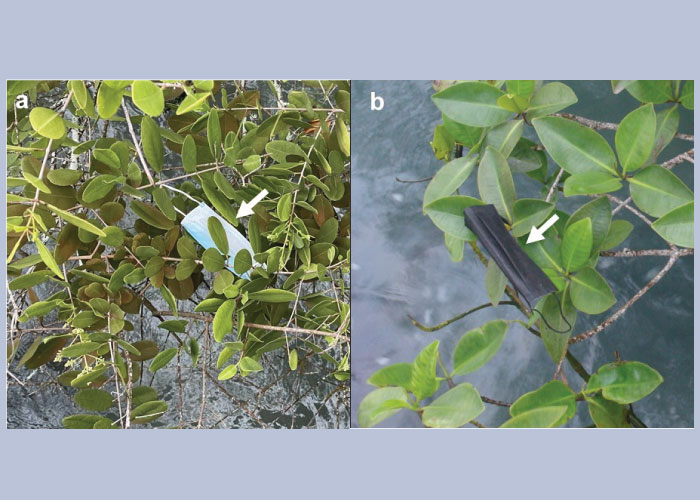
Published in Pub Med | July 27, 2022
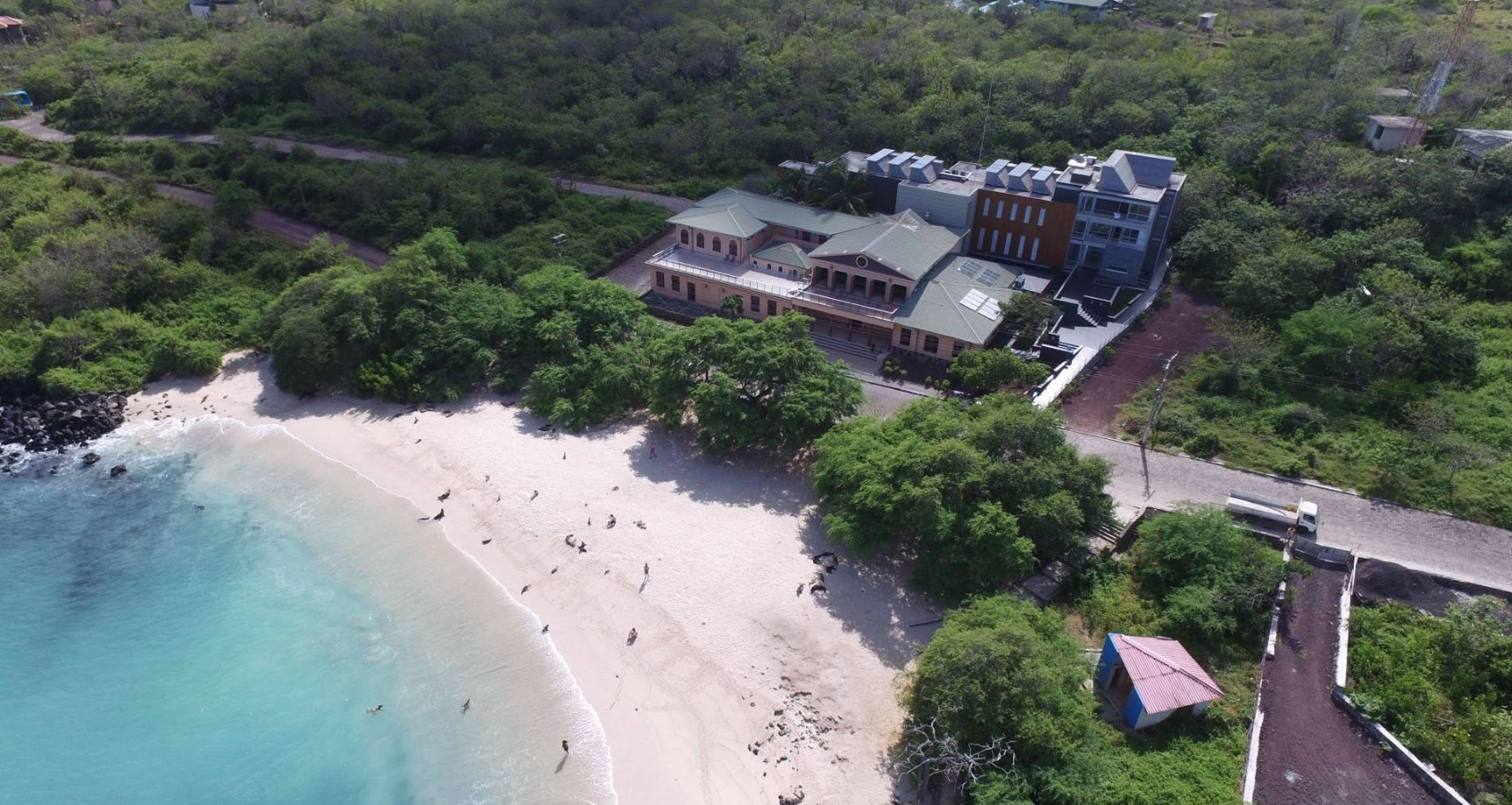
The Galapagos Science Center hosts the World Summit on Island Sustainability to ensure healthy island ecosystems for future generations
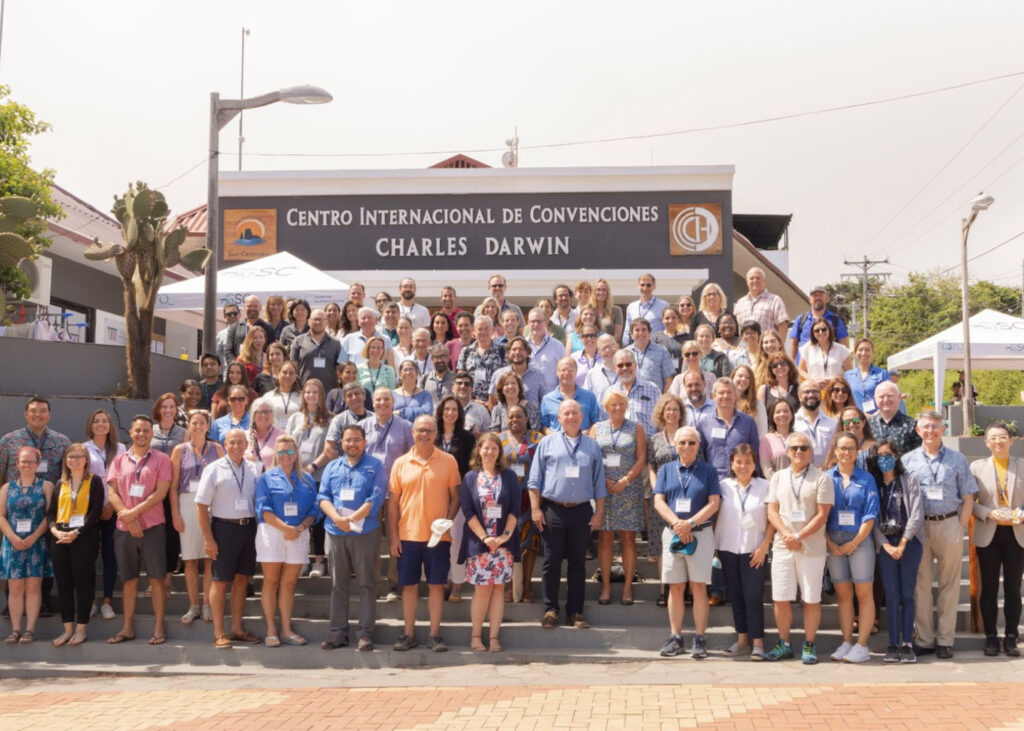
The World Summit on Island Sustainability was held to celebrate the 10th anniversary of the Galapagos Science Center (GSC).
Workforce dynamics in the Galápagos Islands: How agricultural empowerment can aid conservation
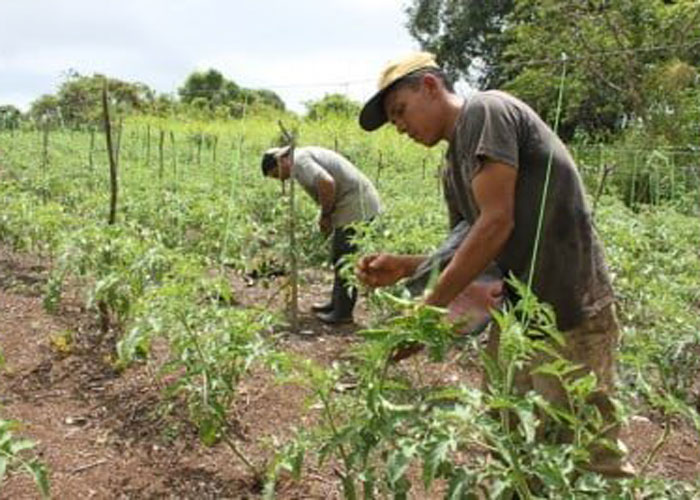
The Galapagos Islands are unique beyond their natural components. Human populations on the islands are the most important authority in the conservation and management of this fragile place. Only 3% of the entire archipelago has been designated for settlements and agriculture.
GSC and GNPD to collaborate on new wildlife on veterinary program in the Galapagos
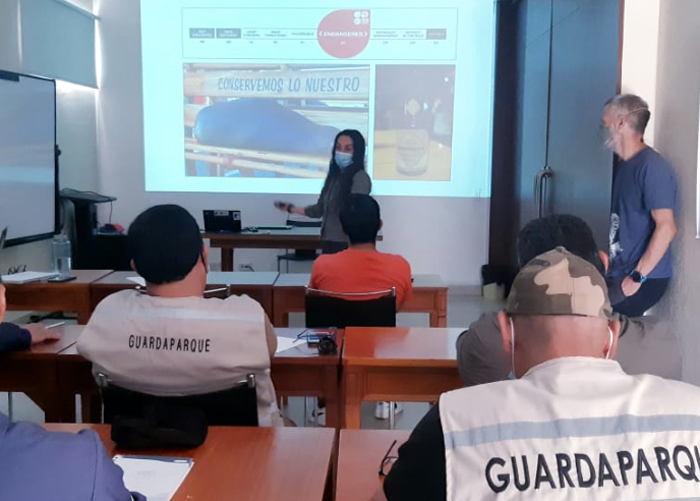
The Galapagos Science Center and the Galapagos National Park will be collaborating to create an operative and sustainable program of wildlife veterinary and management. The GSC and the TUERI Veterinary Hospital of Universidad San Francisco de Quito (USFQ) recently collaborated on a workshop.
Population Genetics and Phylogeography of Galapagos Fur Seals.
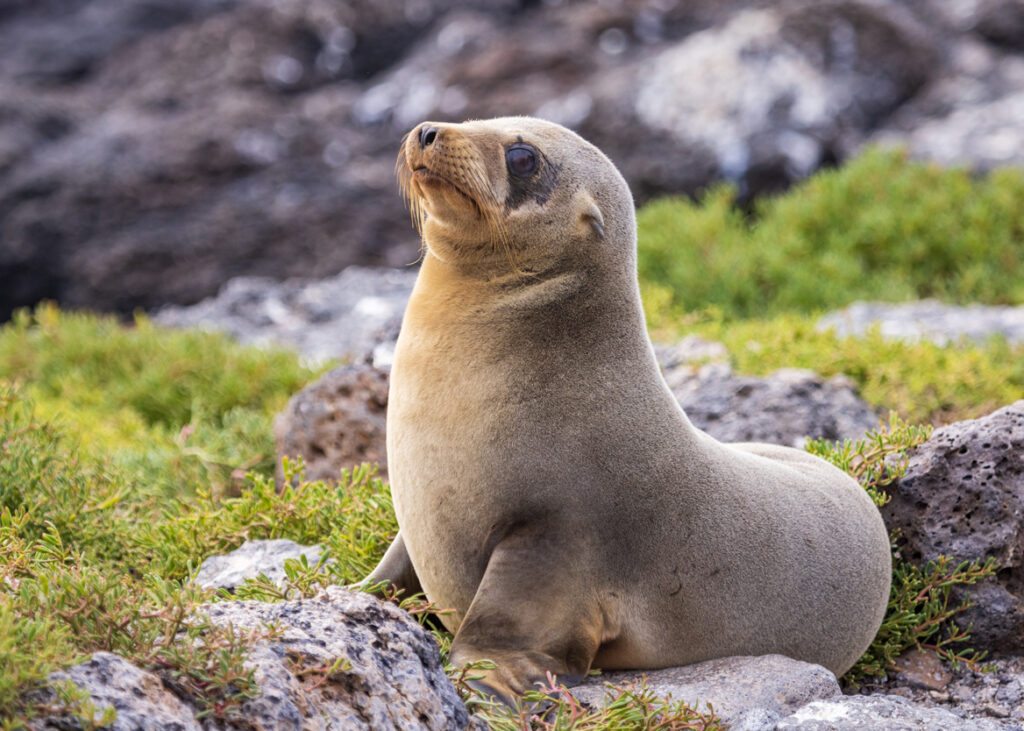
Pinnipeds found across islands provide an ideal opportunity to examine the evolutionary process of population subdivision affected by several mechanisms.
In the report, the genetic consequences of the geographic distribution of rookeries in Galapagos fur seals in creating population structure.
Workshops in Galapagos: New international tools for the study of exotic species in the islands
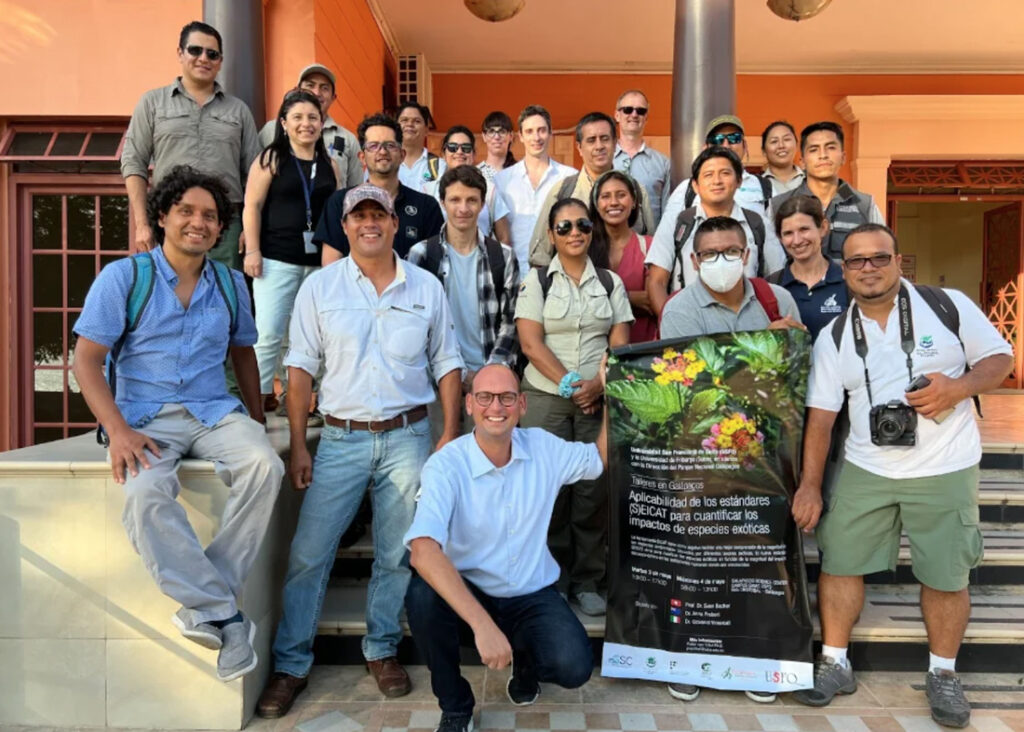
The workshop for the application of the (S)EICAT (Environmental Impact Classification for Alien Taxa / Socio-economic Impact Classification for Alien Taxa) standards was held to quantify the impacts of exotic species at USFQ Galapagos. 23 participants were invloved.
Shipping poses significant threat to the endangered whale shark
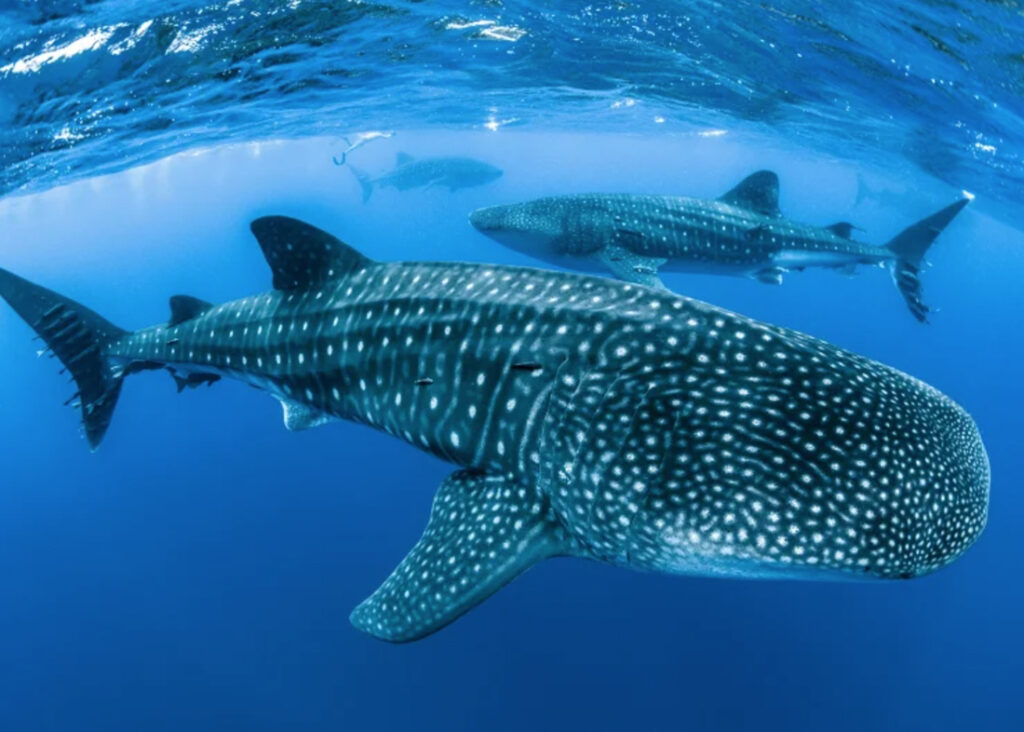
Marine biologists from the Marine Biological Association (MBA) and the University of Southampton have led ground-breaking research which indicates that lethal collisions of whale sharks with large ships are vastly underestimated, and could be the reason why populations are falling.
GSC Experiential Education Program
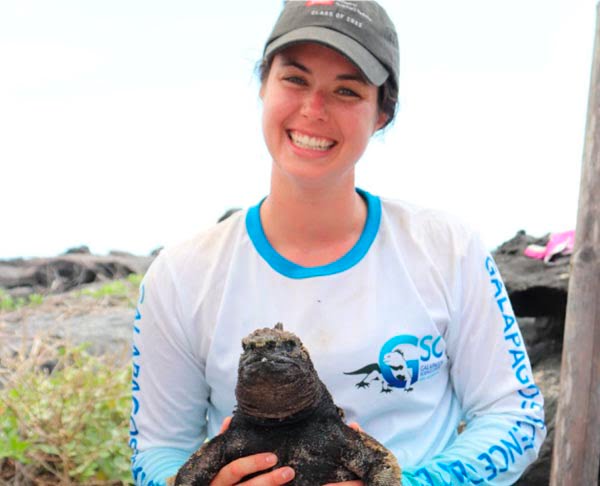
Are you interested in knowing how science is done in Galapagos?
The Galapagos Science Center (GSC) has expanded its operations to host interdisciplinary research projects. Each program offers an opportunity to gain practical and theoretical experience in a variety of research areas. Our team evaluate each program so that both students and researchers can make the most of their time on the Islands.
Scientists Use ultra-light aircraft to tag and track whale sharks of the southern Galapagos Islands for the first time
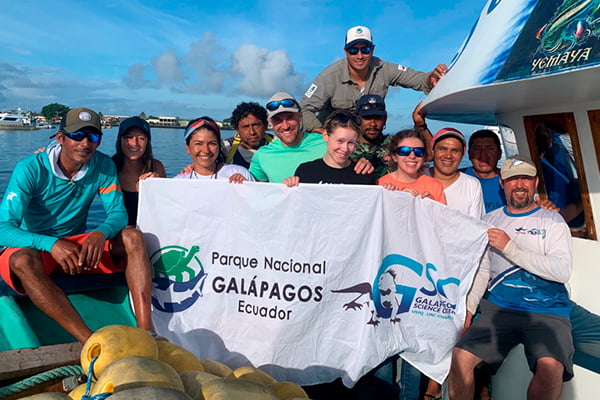
The expedition was supported by the Galapagos Conservation Trust, Rufford Foundation, PADI Foundation and the Royal Society. The expedition is the first step in a wider project with Universidad San Francisco de Quito and partners to monitor and track marine megafauna.
Jointly led UNC and USFQ research team receives $1m grant from National Science Foundation to conduct research in Galapagos and help determine how temperature influences marine ecosystems
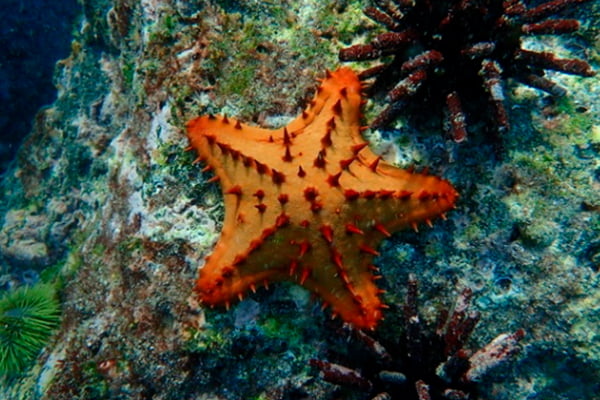
The project will take place at the Galapagos Science Center on San Cristobal, Galapagos.